




21 May 2026
How AI Is Transforming Agriculture and Global Food Systems
Artificial Intelligence is no longer a futuristic concept in agriculture. It is already reshaping how the world grows food, manages resources, predicts climate risks, reduces waste, and strengthens food security.
From AI-powered crop monitoring systems in India to autonomous tractors in the United States and precision irrigation models in the Middle East, agriculture is entering a new era driven by data, automation, and intelligent decision-making.
As global food demand continues to rise alongside climate pressure, water scarcity, labor shortages, and supply chain disruptions, AI is emerging as one of the most powerful technologies supporting the future of sustainable agriculture ( The Next Agriculture Race Won’t Be About Production | Future Food Systems ) and resilient food systems.
Why AI Matters in Agriculture Today
The global agriculture industry is under increasing pressure.
According to the United Nations, the world population is projected to reach nearly 10 billion by 2050, requiring food production systems to become significantly more efficient and sustainable. At the same time, climate change is impacting crop yields, soil health, biodiversity, and water availability across major farming regions.
Traditional agricultural models alone are no longer enough to meet these challenges.
This is where Artificial Intelligence is creating transformational impact.
AI enables farmers, agribusinesses, governments, and researchers to make faster, data-driven decisions using real-time information from satellites, drones, sensors, weather systems, and predictive analytics.
The result is smarter agriculture with improved productivity, lower operational costs, reduced environmental impact, and stronger food security outcomes.
The Rise of Precision Agriculture
One of the biggest impacts of AI is in precision agriculture.
Precision agriculture refers to the use of AI, machine learning, satellite imaging, IoT devices, and data analytics to optimize farming operations with high accuracy.
Instead of treating an entire farm uniformly, AI helps farmers understand exactly where crops need water, fertilizer, pest treatment, or soil improvement.
Key Applications of AI in Precision Farming
- AI-powered crop health monitoring
- Predictive weather analysis
- Smart irrigation systems
- Automated pest and disease detection
- Yield forecasting
- Soil health analysis
- Drone-based field mapping
- Autonomous tractors and machinery
These technologies reduce waste while improving efficiency and productivity.
For example, AI-driven irrigation systems can analyze soil moisture and weather forecasts to deliver water only where needed, helping reduce water consumption significantly in drought-prone regions.
AI and Global Food Security
Food security has become one of the most important global challenges global challenges (https://garcx.com/blogs/global-agriculture-needs-integration-not-just-innovation)
Rising populations, geopolitical conflicts, climate disruptions, and supply chain instability have exposed vulnerabilities in global food systems.
AI is helping strengthen food security through predictive intelligence(https://garcx.com/blogs/how-ai-is-transforming-agriculture-and-global-food-systems) and better agricultural planning.
How AI Supports Food Security
- Early Detection of Crop Diseases
AI systems can identify crop diseases before they spread widely by analyzing plant images and environmental conditions.
Early intervention reduces crop losses and protects farmer incomes.
- Better Yield Prediction
Machine learning models can forecast crop yields using weather patterns, historical production data, and soil analytics.
This helps governments and food suppliers plan distribution more effectively.
- Climate Risk Management
AI tools can predict droughts, floods, heat stress, and pest outbreaks, helping farmers prepare proactively.
- Reducing Food Waste
AI is increasingly being used across food supply chains to improve logistics, storage management, and demand forecasting.
This helps reduce global food waste while improving distribution efficiency.
AI-Powered Smart Farming Technologies
Modern agriculture ( The Next Agriculture Race Won’t Be About Production | Future Food Systems) is rapidly becoming technology-driven
Across global agricultural ecosystems, AI is now integrated into various smart farming technologies.
AI Drones
Agricultural drones equipped with AI can monitor crop health, map farmland, identify irrigation issues, and detect pests with remarkable speed and accuracy.
These systems save time while improving field management decisions.
Autonomous Farm Machinery
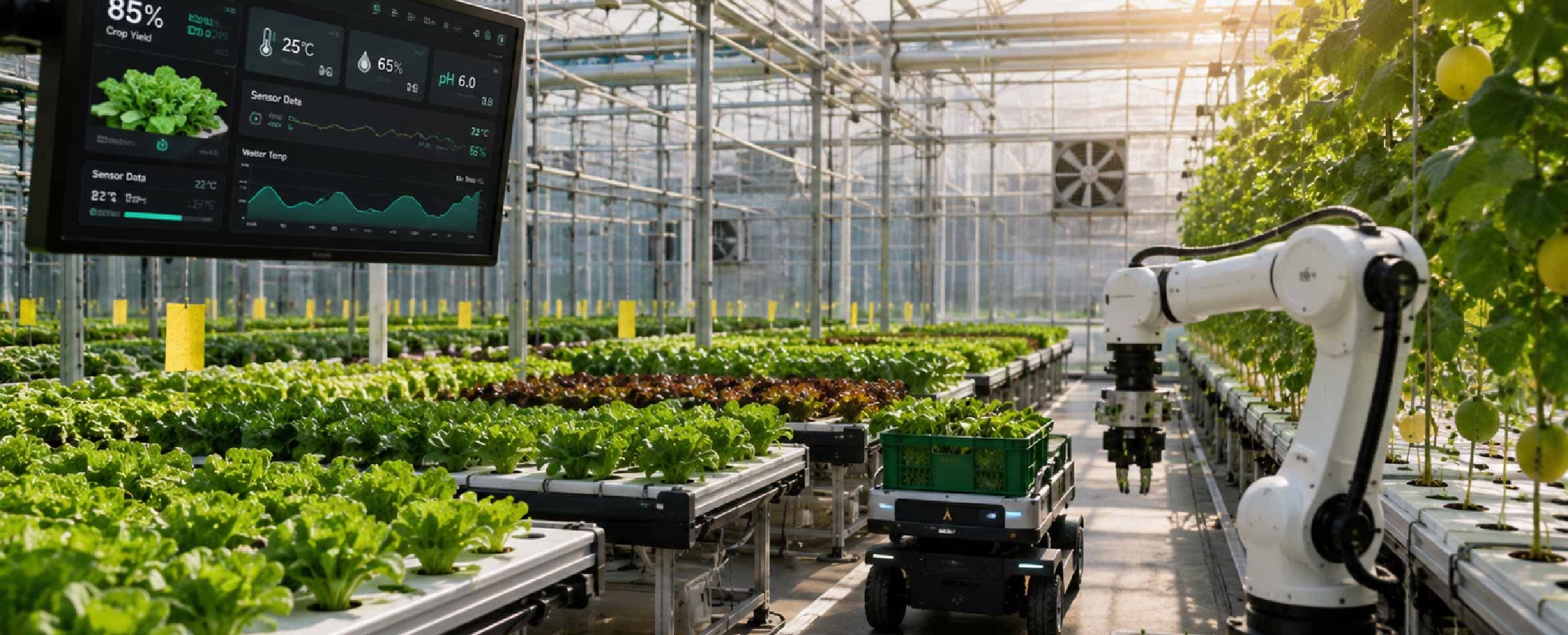
Self-driving tractors and robotic harvesters are helping address labor shortages in agriculture while improving operational efficiency.
Autonomous machinery can work continuously with high precision, reducing fuel and resource waste.
AI-Based Livestock Monitoring
AI is also transforming animal agriculture.
Smart monitoring systems can track animal behavior, detect diseases early, optimize feeding schedules, and improve livestock welfare.
This aligns closely with the growing global focus on One Health approaches that integrate agriculture, animal science, and environmental sustainability.
The Global AgroVet Research Conference (GARCX) has also highlighted AI and smart monitoring systems as emerging drivers of sustainable agri-food innovation and integrated food systems.
AI and Sustainable Agriculture
Sustainability ( Future of Global Agriculture: Why Integration Matters More Than Innovation | GARCX ) is becoming central to the future of agriculture.
Governments, investors, researchers, and global food organizations are increasingly focused on reducing environmental impact while improving productivity.
AI contributes directly to sustainable agriculture by enabling:
- Reduced chemical usage
- Optimized fertilizer application
- Lower water consumption
- Improved soil management
- Reduced greenhouse gas emissions
- Better resource efficiency
- Climate-resilient farming systems
AI-driven systems allow farmers to produce more with fewer resources, which is critical for long-term agricultural sustainability.
The Role of AI in Climate-Resilient Farming
Climate change ( Future of Global Agriculture: Why Integration Matters More Than Innovation | GARCX) is reshaping agriculture worldwide.
Extreme weather events, rising temperatures, changing rainfall patterns, and soil degradation are affecting farming communities across continents.
AI is helping create climate-resilient agriculture systems through predictive modeling and adaptive farming strategies.
Examples Include:
- Drought prediction systems
- Heat stress monitoring for livestock
- Climate-adaptive crop recommendations
- Predictive pest outbreak alerts
- Smart greenhouse automation
- Biosaline agriculture management
In arid regions like the Middle East, AI-powered solutions are becoming especially important for water management and food production.
AI in the Global AgriTech Ecosystem
The rise of AI has accelerated growth across the global AgriTech sector.
Startups, research institutions, governments, and investors are heavily investing in agricultural innovation.
Countries including the UAE, United States, India, Netherlands, Singapore, and Israel are becoming major hubs for AgriTech development.
The UAE in particular has positioned itself as a growing center for food innovation, sustainable agriculture, and desert farming technologies, with increasing investment in AI-powered agriculture systems and food security initiatives.
This global momentum is also creating new opportunities for collaboration between:
- Researchers
- AgriTech startups
- Food system innovators
- Policy makers
- Sustainability leaders
- Investors
- Agricultural universities
Challenges of AI Adoption in Agriculture
While AI offers enormous potential, several challenges still exist.
Major Challenges Include:
- High technology costs
- Limited digital infrastructure in rural regions
- Data privacy concerns
- Lack of technical training
- Smallholder farmer accessibility
- Integration with traditional farming systems
Bridging these gaps will require collaboration between governments, private companies, research organizations, and educational institutions.
Open-access agricultural research and global knowledge-sharing platforms will play an important role in accelerating adoption.
Organizations like ARCC Journals have long contributed to advancing agricultural research communication and global scientific collaboration in agriculture and allied sciences.
The Future of AI in Agriculture
The next decade is expected to bring even deeper integration of AI across global food systems.
Future advancements may include:
- Fully autonomous farms
- AI-powered vertical farming systems
- Hyper-accurate climate forecasting
- Digital twins for agriculture
- Advanced genomic agriculture
- Smart food traceability systems
- Robotics-driven harvesting ecosystems
- AI-integrated global food supply chains
As agriculture becomes increasingly data-driven, the role of AI will continue expanding from operational support to strategic decision-making across the entire agri-food ecosystem.
Conclusion
Artificial Intelligence is rapidly becoming one of the defining forces shaping the future of agriculture and global food systems.
From precision farming and smart irrigation to climate resilience and food security, AI is helping agriculture become more efficient, sustainable, and adaptive in an increasingly uncertain world.
The future of farming will not be driven by technology alone, but by how effectively innovation, research, policy, and global collaboration come together to create resilient food systems for future generations.
As governments, researchers, AgriTech innovators, and industry leaders continue to invest in intelligent agriculture solutions, AI is expected to remain at the center of the global agricultural transformation.
Frequently Asked Questions
AI in agriculture refers to the use of artificial intelligence technologies such as machine learning, computer vision, robotics, and predictive analytics to improve farming efficiency, productivity, and sustainability.
AI helps farmers monitor crops, predict weather conditions, optimize irrigation, detect diseases early, improve yield forecasting, and automate farming operations.
Precision agriculture uses AI, sensors, drones, and data analytics to manage farming practices more accurately and efficiently based on real-time field conditions.
Yes. AI helps reduce water usage, optimize fertilizers, minimize chemical inputs, improve soil health, and support environmentally sustainable farming practices.
Challenges include technology costs, lack of digital infrastructure, farmer training gaps, and accessibility issues for small-scale farmers.
The future includes autonomous farming, AI-powered food supply chains, climate-smart agriculture, advanced robotics, and more intelligent food production ecosystems.
SHARE :