



22 June 2026
Animal Health and the Future of Sustainable Agriculture
Why Animal Health Matters More Than Ever
When discussions about the future of agriculture take place, conversations often focus on crop production, climate resilience, technology, and food security. However, one critical pillar of sustainable agriculture is frequently overlooked: animal health.
Healthy livestock systems are essential for global food production, rural livelihoods, economic stability, and environmental sustainability. As the world faces increasing challenges related to population growth, climate change, emerging diseases, and food security, the role of animal health is becoming more important than ever.
Today, sustainable agriculture can no longer be viewed solely through the lens of crop production. It requires an integrated approach that recognizes the connections between animal health, human well-being, environmental health, and food systems — a principle that lies at the heart of the One Health framework.
Understanding the Connection Between Animal Health and Agriculture
Livestock contributes significantly to global agriculture. Animals provide food, nutrition, income, employment, transportation, and agricultural inputs that support millions of farming systems worldwide.
Healthy livestock populations contribute to:
- Improved food production
- Better nutritional outcomes
- Stronger rural economies
- Enhanced agricultural productivity
- Greater resilience to environmental challenges
Conversely, poor animal health can reduce productivity, disrupt supply chains, increase production costs, and threaten food security.
Disease outbreaks in livestock can have consequences far beyond individual farms. They can affect national economies, international trade, public health, and the stability of entire food systems.
The Growing Challenge of Animal Diseases
The increasing movement of people, animals, and goods across borders has created new opportunities for disease transmission. Climate change, changing ecosystems, and intensifying agricultural systems have further increased the risk of emerging and re-emerging animal diseases.
Outbreaks affecting livestock can result in:
- Reduced meat and dairy production
- Loss of farmer income
- Increased food prices
- Supply chain disruptions
- Public health risks
This is why disease surveillance, veterinary infrastructure, biosecurity measures, and scientific research are becoming essential components of modern agricultural systems.
Protecting animal health is no longer only a veterinary concern. It is an agricultural, economic, environmental, and food security priority.
Animal Health and Food Security
Food security depends on the availability, accessibility, affordability, and quality of food. Animal health directly influences each of these factors.
Healthy animals produce more efficiently, require fewer resources, and contribute to more stable food supplies. Livestock provides critical sources of protein, vitamins, and micronutrients for billions of people worldwide.
When animal diseases reduce productivity, food availability declines and costs increase. This can place additional pressure on vulnerable populations and regions already facing food insecurity.
Strengthening animal health systems therefore becomes an important strategy for building resilient and sustainable food systems.
The Role of Veterinary Science in Sustainable Agriculture
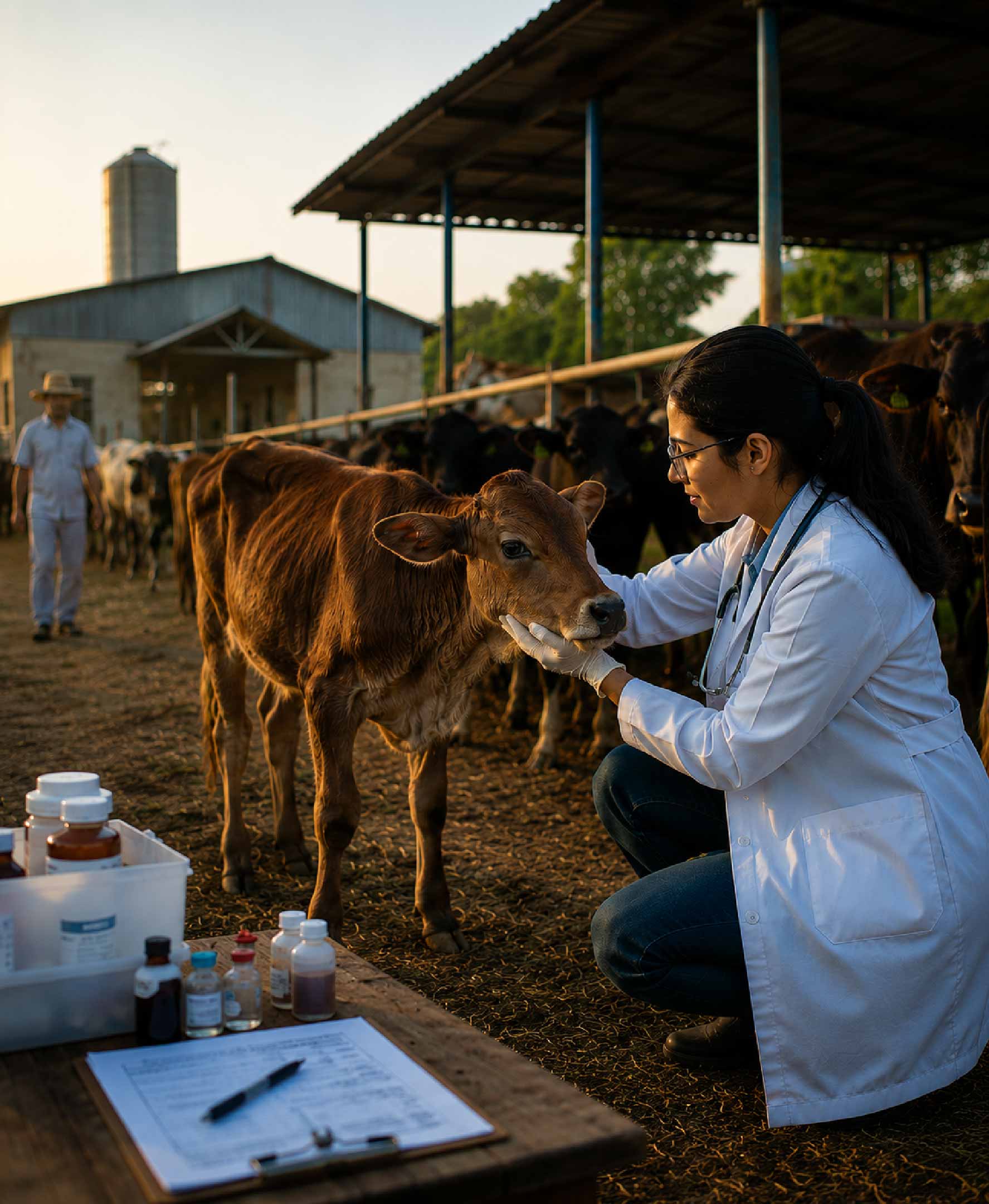
Veterinary science plays a vital role in supporting sustainable agriculture.
Modern veterinary professionals contribute far beyond disease treatment. Their work includes:
- Disease prevention and surveillance
- Food safety monitoring
- Biosecurity planning
- Animal welfare management
- Antimicrobial stewardship
- Public health protection
Advances in veterinary diagnostics, genomics, digital monitoring systems, and predictive analytics are enabling earlier detection of disease threats and more effective responses.
These innovations help protect livestock populations while supporting agricultural productivity and sustainability goals.
Why Animal Welfare Matters
Animal welfare is increasingly recognized as an important component of sustainable food production.
Consumers, policymakers, and industry leaders are placing greater emphasis on responsible farming practices that prioritize animal well-being alongside productivity.
Good animal welfare practices can contribute to:
- Improved health outcomes
- Reduced disease incidence
- Better productivity
- Higher-quality food products
- Greater consumer trust
Sustainable agriculture requires systems that are not only productive but also ethical and resilient.
The One Health Perspective
The relationship between animal health, human health, and environmental health has never been more evident.
Many emerging infectious diseases originate at the interface between animals, humans, and ecosystems. Challenges such as antimicrobial resistance, zoonotic diseases, food safety, and environmental degradation cannot be effectively addressed in isolation.
The One Health approach recognizes that solutions require collaboration across disciplines and sectors.
Researchers, veterinarians, policymakers, farmers, technology providers, public health experts, and environmental scientists must work together to create integrated solutions that strengthen both agriculture and public health.
Technology and the Future of Animal Health
Emerging technologies are transforming how animal health is monitored and managed.
Innovations such as:
- Artificial Intelligence (AI)
- Precision livestock farming
- Wearable animal sensors
- Remote disease monitoring
- Genomic surveillance
- Predictive analytics
are enabling producers and researchers to identify risks earlier and make better-informed decisions.
These technologies have the potential to improve animal welfare, reduce disease outbreaks, optimize resource use, and enhance agricultural sustainability.
As agriculture continues to evolve, technology will play a critical role in supporting healthier and more resilient livestock systems.
Building a More Resilient Agricultural Future
The future of sustainable agriculture depends on strong, integrated systems that recognize the importance of animal health.
Investments in veterinary science, disease surveillance, animal welfare, research, technology, and cross-sector collaboration will be essential for addressing future agricultural challenges.
Healthy animals contribute to healthy food systems.
Healthy food systems contribute to healthy communities.
And together, they help create a more sustainable future for agriculture.
Conclusion
Animal health is no longer a separate conversation within agriculture. It is a foundational element of food security, sustainability, public health, and economic resilience.
As global agricultural systems face increasing complexity, strengthening animal health will remain essential to building productive, resilient, and sustainable food systems.
The future of agriculture depends not only on how we grow food, but also on how effectively we protect the health and welfare of the animals that support it.
Frequently Asked Questions
Animal health supports agricultural productivity, food security, animal welfare, and environmental sustainability while reducing the risk of disease outbreaks.
Healthy livestock contributes to stable food production, improved nutrition, and reliable food supplies, making animal health a key component of food security.
Veterinary science supports disease prevention, food safety, animal welfare, biosecurity, and sustainable livestock management.
One Health recognizes the connections between human health, animal health, environmental health, and food systems, encouraging collaborative solutions to shared challenges.
Artificial intelligence, wearable sensors, genomic surveillance, predictive analytics, and precision livestock farming technologies are helping improve animal health monitoring and disease prevention.
SHARE :