



05 June 2026
Why One Health Is Becoming Central to Future Food Systems | GARCX 2026
The future of food is no longer shaped by agriculture alone.
It is increasingly influenced by a complex network of environmental health, animal health, human well-being, climate resilience, biodiversity, and technological innovation.
As food systems face mounting pressure from climate change, emerging diseases, resource scarcity, and population growth, a new framework is gaining global attention:
- One Health Once viewed primarily as a public health concept, One Health is now becoming a critical foundation for building resilient, sustainable, and
- future-ready food systems.
- The reason is simple.
- Food production does not exist in isolation. The health of crops, livestock, ecosystems, water resources, and communities are deeply interconnected. Challenges affecting one part of the system often create consequences throughout the entire food value
- chain. Understanding and applying the One Health approach may become one of the most important factors shaping the future of agriculture and food
- security worldwide.
What Is One Health?
One Health is an integrated approach that recognizes the close relationship between:
- Human health
- Animal health
- Environmental health
Rather than addressing challenges separately, One Health encourages collaboration across disciplines, industries, and institutions to create solutions that benefit all interconnected systems.
The concept acknowledges that healthy ecosystems support healthy animals, healthy animals support safe and nutritious food production, and healthy food systems contribute directly to human well-being.
This interconnected perspective is becoming increasingly relevant as global food systems become more complex and vulnerable.
Why Food Systems Can No Longer Be Viewed Separately
For decades, agriculture, public health, environmental management, and animal science often operated independently.
Today, those boundaries are becoming increasingly blurred.
A disease outbreak affecting livestock can disrupt food supply chains.
Water scarcity can reduce agricultural productivity and impact nutrition.
Environmental degradation can increase vulnerability to pests and emerging pathogens.
Climate-related events can simultaneously affect crop yields, animal welfare, and food affordability.
These interconnected risks highlight why future food systems require integrated thinking rather than isolated solutions.
One Health provides a framework for addressing these challenges collectively.
Climate Change Is Accelerating the Need for One Health
Climate volatility is transforming agricultural systems across the world.
Rising temperatures, changing rainfall patterns, droughts, floods, and extreme weather events are affecting:
- Crop production
- Livestock management
- Water availability
- Soil health
- Biodiversity
These environmental changes also influence the spread of pests, diseases, and zoonotic pathogens.
As ecosystems become more stressed, the connections between environmental conditions, animal health, and food production become even more evident.
Building climate-resilient food systems therefore requires a broader perspective that goes beyond agricultural productivity alone.
It requires understanding how entire ecosystems function together.
Animal Health Is a Critical Component of Food Security
Livestock contributes significantly to global nutrition, rural livelihoods, and agricultural economies.
However, animal health challenges can rapidly impact food production and food availability.
Disease outbreaks can lead to:
- Reduced productivity
- Supply chain disruptions
- Economic losses
- Increased food prices
- Threats to public health
The One Health approach promotes stronger surveillance systems, preventive healthcare, improved biosecurity, and cross-sector collaboration.
By strengthening animal health systems, countries can improve food security while reducing broader risks to human and environmental health.
Sustainable Agriculture Depends on System Thinking
Sustainability is often discussed in terms of production efficiency.
However, long-term sustainability requires balancing multiple objectives simultaneously:
- Food production
- Environmental protection
- Resource conservation
- Community well-being
- Economic resilience
One Health supports this balance by encouraging decision-making that considers the impacts across the entire food system.
For example:
- Improving soil health benefits crop productivity.
- Healthier soils improve water retention.
- Better water management strengthens ecosystem resilience.
- Resilient ecosystems support biodiversity and agricultural productivity.
The outcome is a more sustainable food system that delivers benefits beyond individual farms.
Technology Is Strengthening the One Health Ecosystem
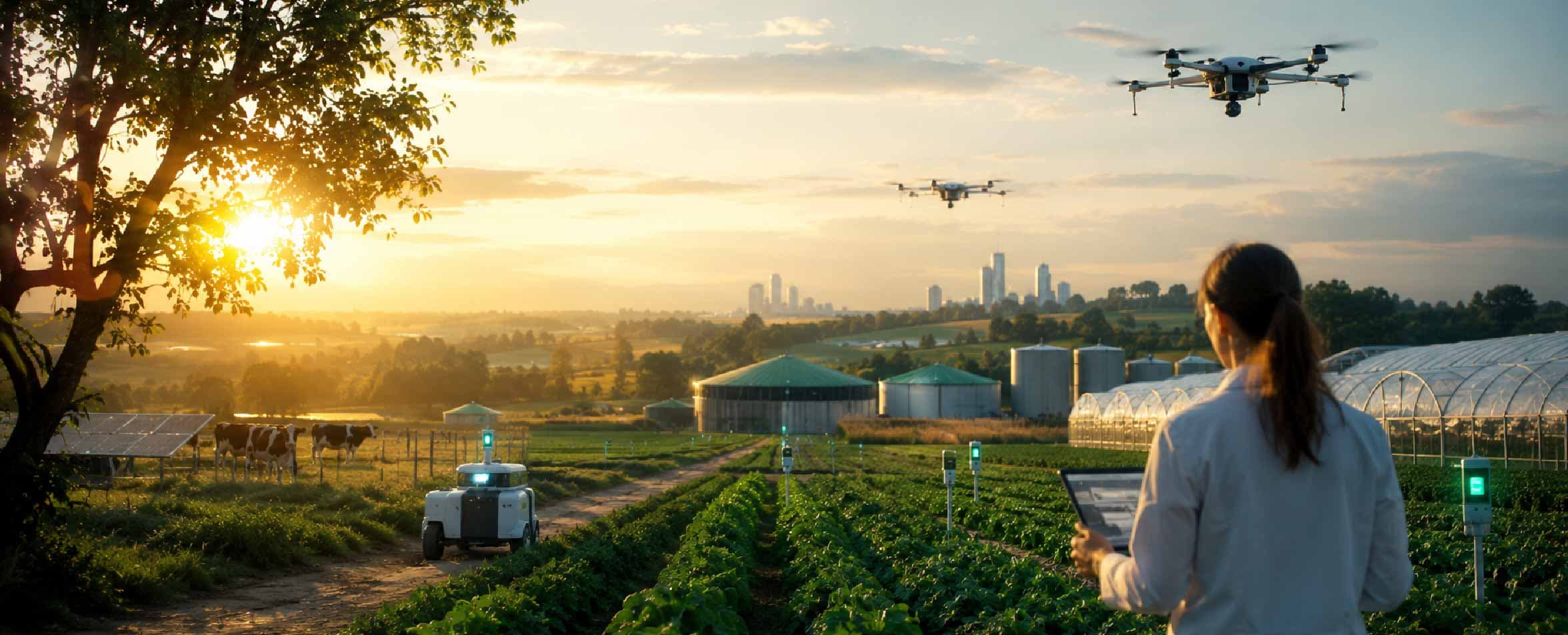
Emerging technologies are helping transform One Health from a concept into a practical framework.
Innovations such as:
- Artificial Intelligence
- Predictive analytics
- Precision agriculture
- Remote sensing
- Smart livestock monitoring
- Environmental data platforms
allow researchers, governments, and industry leaders to identify risks earlier and respond more effectively.
Data-driven systems can improve disease surveillance, resource management, food safety monitoring, and climate adaptation strategies.
As digital agriculture evolves, technology is becoming a critical enabler of integrated One Health solutions.
The Future of Food Systems Will Be Collaborative
The challenges facing global food systems cannot be solved by a single sector.
Governments, researchers, agribusinesses, technology innovators, public health professionals, environmental organizations, and policymakers all have important roles to play.
Future food systems will depend on:
- Cross-disciplinary collaboration
- Knowledge sharing
- Evidence-based decision making
- Innovation ecosystems
- Integrated policy frameworks
The One Health approach provides a common foundation for bringing these diverse stakeholders together around shared goals.
Why One Health Matters More Than Ever
Food security, sustainability, climate resilience, and public health are no longer separate conversations.
They are increasingly interconnected.
As global challenges become more complex, solutions must become more integrated.
The future of agriculture will not be defined solely by higher yields or new technologies.
It will be shaped by the ability to create food systems that are resilient, adaptive, sustainable, and capable of supporting the health of people, animals, and the planet together.
That is why One Health is no longer simply an emerging concept.
It is becoming a central pillar of future food systems.
Looking Ahead
Across the world, researchers, policymakers, industry leaders, and innovators are exploring how integrated approaches can strengthen agriculture, improve food security, and build more sustainable futures.
As these conversations continue to evolve, One Health is increasingly serving as a bridge between agriculture, animal science, environmental stewardship, and human well-being.
The future of food systems may depend not only on what we produce, but on how effectively we connect the systems that sustain life itself.
Frequently Asked Questions
One Health is an integrated framework that recognizes the connection between human health, animal health, and environmental health, promoting collaborative solutions to shared challenges.
Food systems depend on healthy ecosystems, healthy animals, and healthy communities. One Health helps address these interconnected factors to improve food security and sustainability.
Climate change affects agriculture, ecosystems, water resources, and disease patterns. One Health helps develop integrated strategies to manage these interconnected impacts.
Healthy livestock contribute to stable food production, nutrition, and rural livelihoods. Animal health management is a critical component of resilient food systems.
Technologies such as AI, predictive analytics, precision agriculture, and digital monitoring systems help improve surveillance, risk assessment, and decision-making across food systems.
No. One Health extends beyond public health and is increasingly applied to agriculture, food security, environmental management, sustainability, and climate resilience.
Because sustainable agriculture depends on healthy ecosystems, responsible resource management, biodiversity conservation, and resilient food production systems, all of which align with One Health principles.
SHARE :