




08 July 2026
AgTech Infrastructure in 2026: Why Future Farming Needs More Than Technology
Is agriculture ready for the future — or are we still discussing innovation in pieces?
Across the world, agriculture is entering a new phase.
The conversation is no longer limited to higher yields, better machinery or improved farm practices. Today, agriculture is being reshaped by artificial intelligence, data systems, robotics, climate intelligence, animal health surveillance, biosecurity, food logistics and investment-led innovation.
But there is a bigger question the global agriculture sector needs to ask:
Can technology truly transform farming if the systems around it are not ready?
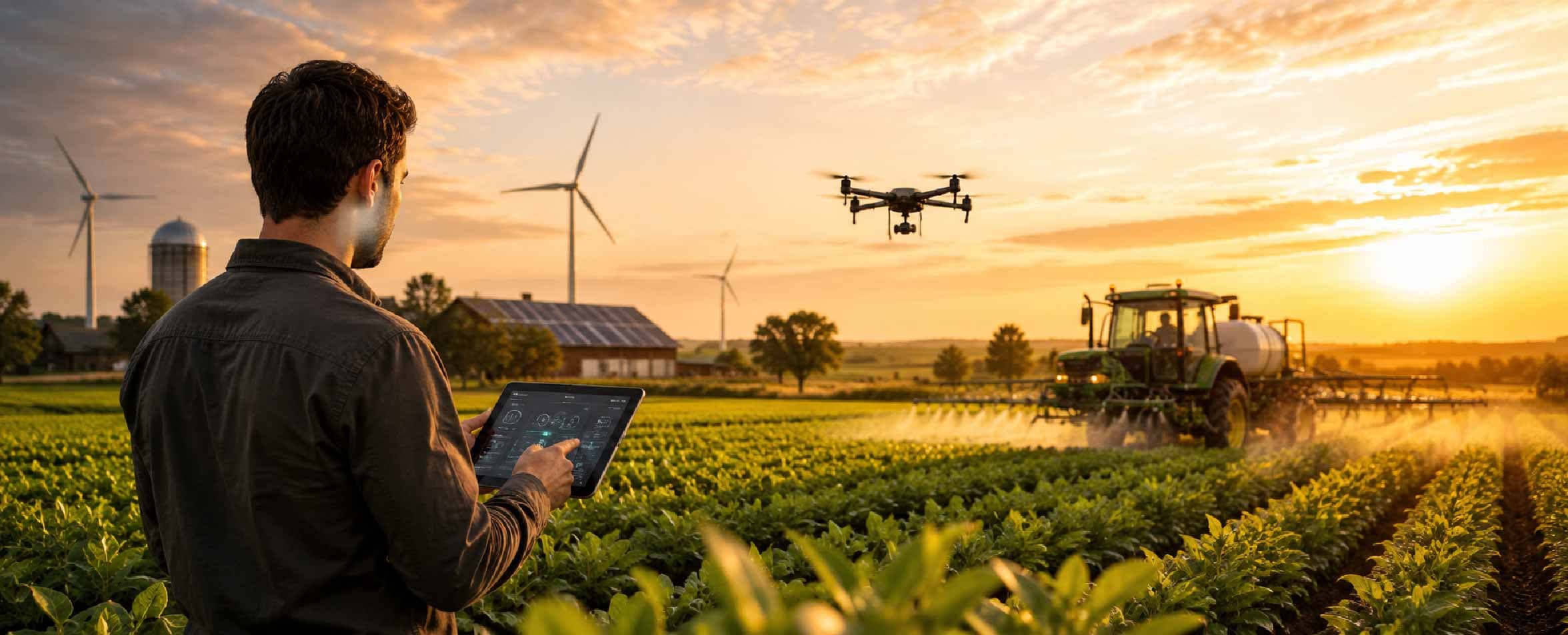
- A drone can collect farm data.
- A sensor can measure soil moisture.
- AI can predict crop stress.
- A digital tool can monitor livestock health.
But if these tools are not connected to farmers, researchers, policymakers, investors, food businesses and animal health experts, their impact remains limited.
This is where AgTech infrastructure becomes critical.
In 2026, the future of agriculture will not be defined only by new technologies. It will be defined by how well these technologies are connected, scaled and applied across real agricultural systems.
And this is exactly why conversations around AgTech infrastructure, One Health, food security and animal health are becoming central to platforms like GARCX 2026.
What Is AgTech Infrastructure?
AgTech infrastructure refers to the digital, physical, scientific and institutional systems that support modern agriculture.
It is the backbone that allows agricultural innovation to move from ideas and pilot projects to real-world impact.
AgTech infrastructure may include:
- Digital farm monitoring systems
- AI-based crop and livestock intelligence
- Soil, water and climate sensors
- Animal health surveillance systems
- Biosecurity and disease early-warning systems
- Food supply chain and cold chain systems
- Data platforms for researchers and policymakers
- Smart irrigation and resource management tools
- Research and testing ecosystems
- Investment and policy frameworks that support scaling
In simple terms, AgTech infrastructure is what makes technology useful, connected and scalable.
Without infrastructure, innovation remains scattered.
With infrastructure, agriculture becomes more intelligent, resilient and future-ready.
Why Is This Conversation Urgent in 2026?
Agriculture is not facing one challenge. It is facing several challenges at once.
- Climate volatility is affecting crop cycles.
- Water scarcity is changing production models.
- Livestock diseases are creating risks for farmers and food systems.
- Food safety and traceability are becoming global priorities.
- Farmers need faster and more reliable decision support.
- Governments are under pressure to strengthen food security.
- Investors are looking for scalable, impact-driven agricultural solutions.
This means agriculture can no longer depend on isolated innovation.
- A single technology may solve one problem.
- A connected system can strengthen the entire sector.
That is why AgTech infrastructure is becoming one of the most important conversations in global agriculture.
The question is not only: What new technology can improve farming?
The stronger question is: What systems are needed to make agriculture more resilient, productive and sustainable?
This is the kind of question that needs researchers, industry leaders, policymakers, startups, investors, animal health experts and food system professionals in the same conversation.
That is where GARCX 2026 becomes highly relevant.
The Five Layers of AgTech Infrastructure
1. Data Systems: Can Agriculture Make Better Decisions Without Better Data?
Modern agriculture depends on data.
Farm-level data, weather data, soil data, crop health information, livestock records, satellite imagery and market intelligence are all becoming essential for decision-making.
But data alone is not enough.
The real value comes when data is organized, interpreted and used at the right time.
Strong data infrastructure can help farmers detect risks earlier, researchers identify patterns faster, policymakers create better agricultural strategies and businesses make more informed decisions.
Without reliable data systems, AgTech remains incomplete.
2. Climate and Resource Systems: Can Farming Survive Without Climate Intelligence?
Climate stress is one of the biggest pressures on agriculture.
Changing rainfall patterns, heat stress, water limitations and soil degradation are affecting production across regions.
This is why climate-smart agriculture needs strong infrastructure.
Smart irrigation, soil monitoring, climate forecasting, water-use analytics and resource management systems are no longer optional. They are becoming essential for food security.
Agriculture cannot afford to react only after losses happen.
The future will depend on systems that help farmers and institutions predict, prepare and adapt earlier.
3. Animal Health and Biosecurity Systems: Can Food Security Be Protected Without Livestock Health?
Animal health is not a separate conversation anymore.
It is directly connected to food security, food safety, farmer livelihoods, public health and global trade.
Livestock diseases, antimicrobial resistance, zoonotic risks and farm-level biosecurity challenges require coordinated systems.
This includes disease surveillance, diagnostics, digital livestock monitoring, veterinary research, biosecurity protocols and early-warning systems.
This is where the One Health approach becomes essential.
Human health, animal health, agriculture and the environment are deeply connected. If one system is weak, the impact can move across the entire food chain.
At GARCX 2026, this connection between agriculture and animal health is not treated as a side topic. It is part of the core conversation.
4. Food Supply and Logistics Systems: Is Smart Farming Enough If Food Still Gets Lost?
Producing food is only one part of the challenge.
Food also needs to be stored, transported, processed and delivered safely.
That is why cold chain systems, traceability tools, food safety monitoring and supply chain intelligence are becoming important parts of AgTech infrastructure.
Smart farming cannot end at the farm gate.
- If logistics are weak, food loss increases.
- If traceability is poor, food safety becomes harder to manage.
- If market systems are disconnected, farmers may not receive the value of innovation.
A future-ready food system needs both production intelligence and distribution intelligence.
5. Research, Policy and Investment Systems: Can Innovation Scale Without Collaboration?
Technology does not scale by itself.
It needs research validation, policy support, investment, industry adoption and practical implementation.
This is one of the most important parts of AgTech infrastructure.
- Agricultural researchers generate knowledge.
- Startups create new tools.
- Industry leaders test market applications.
- Policymakers shape the regulatory environment.
- Investors help solutions scale.
- Practitioners bring ground-level realities.
When these groups work separately, progress becomes slow.
When they work together, agriculture becomes more responsive, scalable and globally relevant.
This is exactly the kind of cross-sector convergence that GARCX 2026 is designed to support.
Why AgTech Infrastructure Is a One Health Priority
One Health connects human health, animal health, agriculture, food systems and the environment.
AgTech infrastructure helps make this connection practical.
For example:
- Crop monitoring supports food availability.
- Animal health surveillance reduces disease risks.
- Soil and water intelligence supports environmental health.
- Food safety systems protect consumers.
- Climate data helps farms prepare for shocks.
- Research collaboration improves evidence-based action.
This is why One Health cannot remain only a concept.
It needs platforms, systems, data, research, policy alignment and global collaboration.
In 2026, agriculture professionals cannot afford to think in silos. Food security, animal health, climate resilience and technology are now part of the same conversation.
Why GARCX 2026 Matters Now
GARCX 2026 brings together the sectors that are shaping the future of agriculture.
It is a global platform for conversations across:
- Agriculture
- Animal health
- AgTech
- Food systems
- One Health
- Climate resilience
- Research and innovation
- Policy and investment
- Sustainable agriculture
- For researchers, GARCX 2026 offers visibility and knowledge exchange.
- For industry leaders, it creates access to emerging ideas and sector conversations.
- For startups and innovators, it opens doors to relevant networks.
- For policymakers and institutions, it supports cross-sector dialogue.
- For delegates, it offers a space to connect with people working on the future of agriculture and animal health.
This is not the time for passive observation.
Agriculture is changing now. The conversations that will shape the next decade are already happening.
The real question is: Will you be part of them?
Conclusion: The Future of Agriculture Will Belong to Connected Systems
The next agricultural breakthrough may not be one machine, one app or one technology.
It may be the system that connects everything.
AgTech infrastructure is helping agriculture move from isolated tools to integrated systems, from reaction to prediction, and from individual innovation to collective progress.
The future of farming will depend on how well science, technology, policy, animal health, food security and investment work together.
That is why GARCX 2026 is more than a conference. It is a global meeting point for the conversations agriculture urgently needs.
If your work is connected to agriculture, animal health, AgTech, food systems, sustainability, research, policy or One Health, this is where your voice, ideas and connections can matter.
Delegate registrations for GARCX 2026 are open.
Be part of the platform where agriculture, animal health and food system futures are being discussed.
Frequently Asked Questions
AgTech infrastructure refers to the digital, physical, scientific and institutional systems that support modern agriculture. It includes data platforms, AI tools, sensors, livestock monitoring, biosecurity systems, logistics, research networks and policy frameworks.
AgTech infrastructure is important because agriculture is facing climate stress, food security risks, animal health challenges and resource limitations. Strong infrastructure helps technologies work together and scale effectively.
It supports food security by improving crop monitoring, animal health surveillance, resource management, food logistics, supply chain traceability and evidence-based decision-making.
AgTech supports One Health by connecting agriculture, animal health, food safety, environmental monitoring and public health through data, surveillance and integrated systems.
GARCX 2026 brings together researchers, industry leaders, policymakers, innovators, startups, investors and practitioners to discuss agriculture, animal health, AgTech, food systems and One Health. It is a platform for global learning, visibility and collaboration.
Researchers, academicians, industry professionals, AgTech innovators, animal health experts, food system leaders, startups, investors, policymakers, students and practitioners connected to agriculture and allied sciences can participate in GARCX 2026.
SHARE :