



02 July 2026
How Artificial Intelligence Is Reshaping Global Agriculture Beyond Precision Farming
Artificial Intelligence Is No Longer the Future of Agriculture—It Is the Present
For years, discussions around Artificial Intelligence (AI) in agriculture focused primarily on precision farming. AI was viewed as a tool for optimizing irrigation, identifying crop diseases, or guiding autonomous tractors.
That perception is rapidly changing.
Today, Artificial Intelligence is becoming the digital intelligence layer of global agriculture.
It is helping governments strengthen food security strategies, enabling researchers to accelerate scientific discoveries, assisting farmers in making data-driven decisions, improving livestock health monitoring, optimizing food supply chains, and supporting policymakers in responding to increasingly complex agricultural challenges.
Agriculture is evolving from a production-driven industry into a knowledge-driven ecosystem.
Artificial Intelligence is becoming the technology connecting every part of that ecosystem.
Why Agriculture Needs Artificial Intelligence
Agriculture is facing challenges unlike any previous generation.
Farmers must produce more food while using fewer natural resources.
Governments are working to improve food security amid climate uncertainty.
Researchers are responding to emerging diseases affecting crops and livestock.
Consumers increasingly expect sustainable, traceable, and responsibly produced food.
Managing these interconnected challenges requires analyzing enormous amounts of information—far beyond what traditional systems can process efficiently.
Artificial Intelligence enables agriculture to transform data into actionable decisions.
AI Is Moving Beyond Precision Agriculture
Precision agriculture remains one of AI’s most visible applications.
However, the next phase of agricultural transformation extends well beyond individual fields.
Artificial Intelligence is now supporting decision-making across the entire agricultural value chain.
Today’s AI applications include:
- Climate forecasting
- Crop modelling
- Livestock health monitoring
- Soil intelligence
- Supply chain optimization
- Food quality assessment
- Disease surveillance
- Agricultural finance
- Sustainability reporting
- Policy planning
Rather than improving one farming activity, AI is increasingly connecting production, research, logistics, markets, and governance.
Smarter Farming Through Data
Modern farms generate enormous volumes of information.
Satellite imagery, weather stations, IoT sensors, farm equipment, drones, laboratory analyses, and market platforms continuously produce data.
Artificial Intelligence helps convert these datasets into practical recommendations.
Examples include:
- Identifying crop stress before symptoms become visible.
- Predicting irrigation needs based on weather forecasts.
- Recommending optimal planting windows.
- Detecting nutrient deficiencies.
- Forecasting expected yields.
- Optimizing fertilizer application.
These insights enable farmers to reduce waste while improving productivity and environmental performance.
AI Is Transforming Animal Health
Animal health is becoming an increasingly important focus for Artificial Intelligence.
Modern livestock operations use AI to monitor animal behaviour, feeding patterns, movement, temperature, and overall health.
Computer vision technologies can identify early signs of illness.
Wearable sensors detect physiological changes before clinical symptoms appear.
Machine learning models analyse historical disease data to predict future outbreaks.
These capabilities improve:
- Animal welfare
- Disease prevention
- Veterinary decision-making
- Farm productivity
- Food safety
- Biosecurity
Healthy livestock contributes directly to resilient food systems and sustainable agriculture.
Artificial Intelligence and Food Security
Food security depends not only on food production but also on anticipating risks before they become crises.
Artificial Intelligence strengthens food security by improving forecasting and resilience.
Governments increasingly use AI for:
- Crop production forecasting
- Early warning systems
- Drought prediction
- Pest monitoring
- Supply chain analysis
- Market intelligence
- Food demand modelling
These insights support better planning, reduce uncertainty, and strengthen national food security strategies.
AI Is Accelerating Agricultural Research
Scientific research traditionally requires years of experimentation and analysis.
Artificial Intelligence is helping researchers process large datasets more efficiently and identify patterns that might otherwise remain unnoticed.
Applications include:
- Genomic analysis
- Crop breeding
- Disease modelling
- Soil microbiome research
- Climate simulations
- Remote sensing analysis
AI is not replacing scientific expertise.
Instead, it enables researchers to reach evidence-based conclusions faster while expanding opportunities for interdisciplinary collaboration.
Digital Agriculture Is Becoming an Integrated Ecosystem
Artificial Intelligence performs best when connected with other emerging technologies.
These include:
- Internet of Things (IoT): Smart sensors continuously monitor crops, livestock, machinery, and environmental conditions.
- Satellite Monitoring: Remote sensing enables continuous observation of agricultural landscapes.
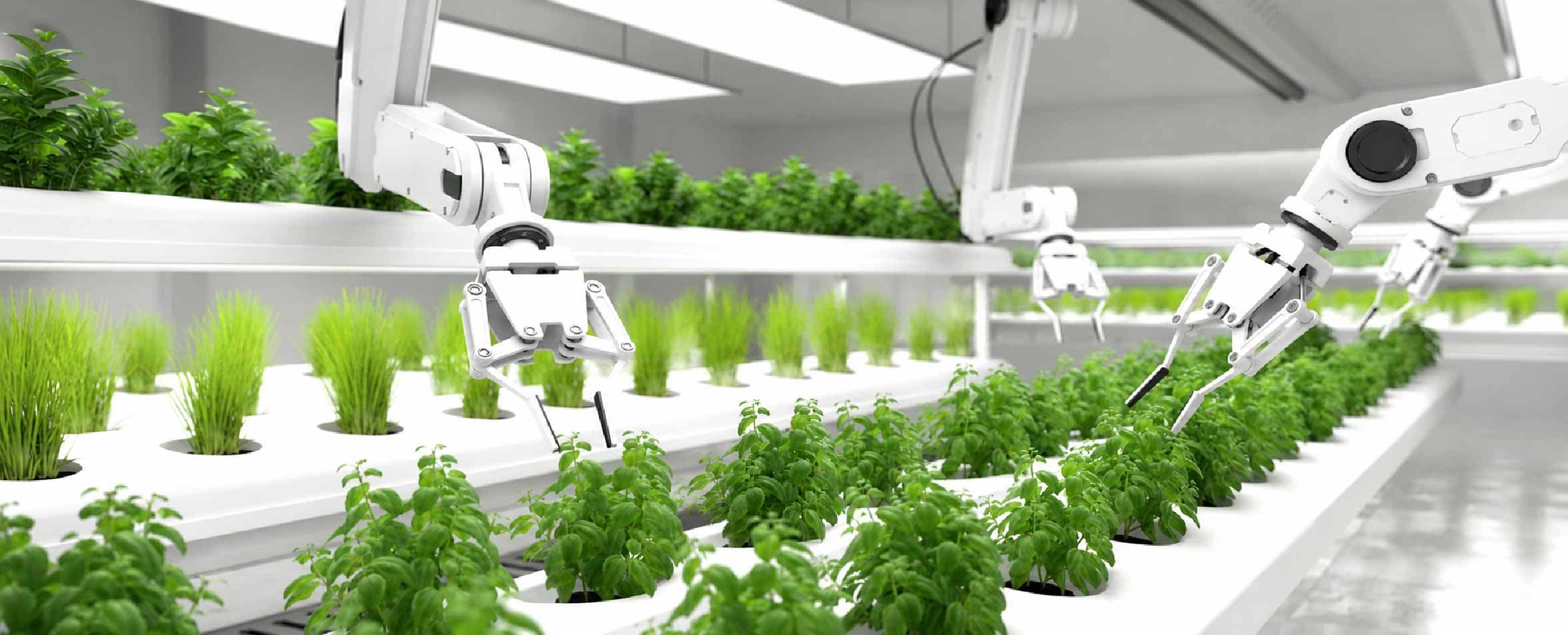
- Robotics: Autonomous machinery supports planting, harvesting, spraying, and monitoring operations.
- Cloud Computing: Cloud platforms integrate agricultural data from multiple sources into unified decision-support systems.
Together, these technologies create connected agricultural ecosystems capable of responding to changing conditions in real time.
Supporting Climate-Resilient Agriculture
Climate variability continues to influence agricultural productivity across every region of the world.
Artificial Intelligence is helping producers adapt by improving climate intelligence.
Examples include:
- Seasonal forecasting
- Heat stress prediction
- Water availability analysis
- Flood risk assessment
- Crop suitability modelling
- Carbon monitoring
These capabilities allow farmers and policymakers to prepare for changing environmental conditions rather than simply reacting to them.
Artificial Intelligence and the One Health Approach
One Health recognizes that human health, animal health, environmental health, and food systems are interconnected.
Artificial Intelligence strengthens this approach by integrating information across traditionally separate sectors.
AI can support:
- Zoonotic disease surveillance
- Food safety monitoring
- Environmental risk assessment
- Wildlife monitoring
- Livestock disease prediction
- Climate-health modelling
Rather than addressing problems independently, AI enables more coordinated decision-making across multiple disciplines.
Responsible AI Will Shape Agriculture’s Future
While Artificial Intelligence offers significant opportunities, responsible implementation remains essential.
Agricultural stakeholders increasingly recognize the importance of:
- Data privacy
- Transparency
- Ethical AI
- Farmer accessibility
- Digital inclusion
- Human oversight
Successful AI adoption depends on ensuring that technologies remain practical, inclusive, and accessible for producers of all scales.
Global Collaboration Is Accelerating Innovation
Artificial Intelligence in agriculture is advancing through collaboration.
- Researchers develop algorithms.
- Technology companies create platforms.
- Governments establish supportive policies.
- Universities generate new knowledge.
- Farmers provide practical experience.
- International organizations facilitate knowledge exchange.
The future of AI in agriculture will be shaped by partnerships that connect science, technology, policy, and implementation.
Looking Ahead
Artificial Intelligence is no longer simply improving farming operations.
It is reshaping how agriculture functions as a global system.
From supporting food security and animal health to strengthening climate resilience and accelerating scientific research, AI is becoming an essential component of modern agriculture.
The next generation of agricultural innovation will depend not only on technological capability but also on collaboration between researchers, policymakers, innovators, industry leaders, and producers.
Those who successfully integrate Artificial Intelligence into sustainable agricultural systems will be better prepared to meet the food, environmental, and economic challenges of the future.
Key Takeaways
- Artificial Intelligence is transforming every stage of agriculture, not just precision farming.
- AI improves crop management, livestock health, food security, and climate resilience.
- Governments increasingly use AI for agricultural planning and risk management.
- Digital agriculture combines AI with IoT, robotics, satellites, and cloud computing.
- Responsible AI adoption requires transparency, accessibility, and collaboration.
- AI supports the One Health approach by connecting agriculture, animal health, environmental health, and food systems.
Frequently Asked Questions
AI supports crop monitoring, disease detection, weather forecasting, livestock management, yield prediction, supply chain optimization, and food security planning.
Digital agriculture integrates technologies such as Artificial Intelligence, IoT sensors, drones, robotics, satellite imagery, and cloud computing to improve agricultural productivity and sustainability.
AI helps predict crop production, monitor climate risks, detect pests and diseases, optimize supply chains, and support government planning for resilient food systems.
Yes. AI-powered sensors, computer vision systems, and predictive analytics help monitor livestock health, identify diseases early, improve animal welfare, and strengthen biosecurity.
Artificial Intelligence connects data from agriculture, animal health, environmental monitoring, and public health to improve surveillance, risk assessment, and collaborative decision-making.
SHARE :