
 23rd-24th November 2026
 Dusit Thani, Dubai | Hybrid Event
GLOBAL AGROVET RESEARCH CONFERENCE

POWERED BY
ARCC JOURNALS
POWERED BY
ARCC JOURNALS

15 April 2026
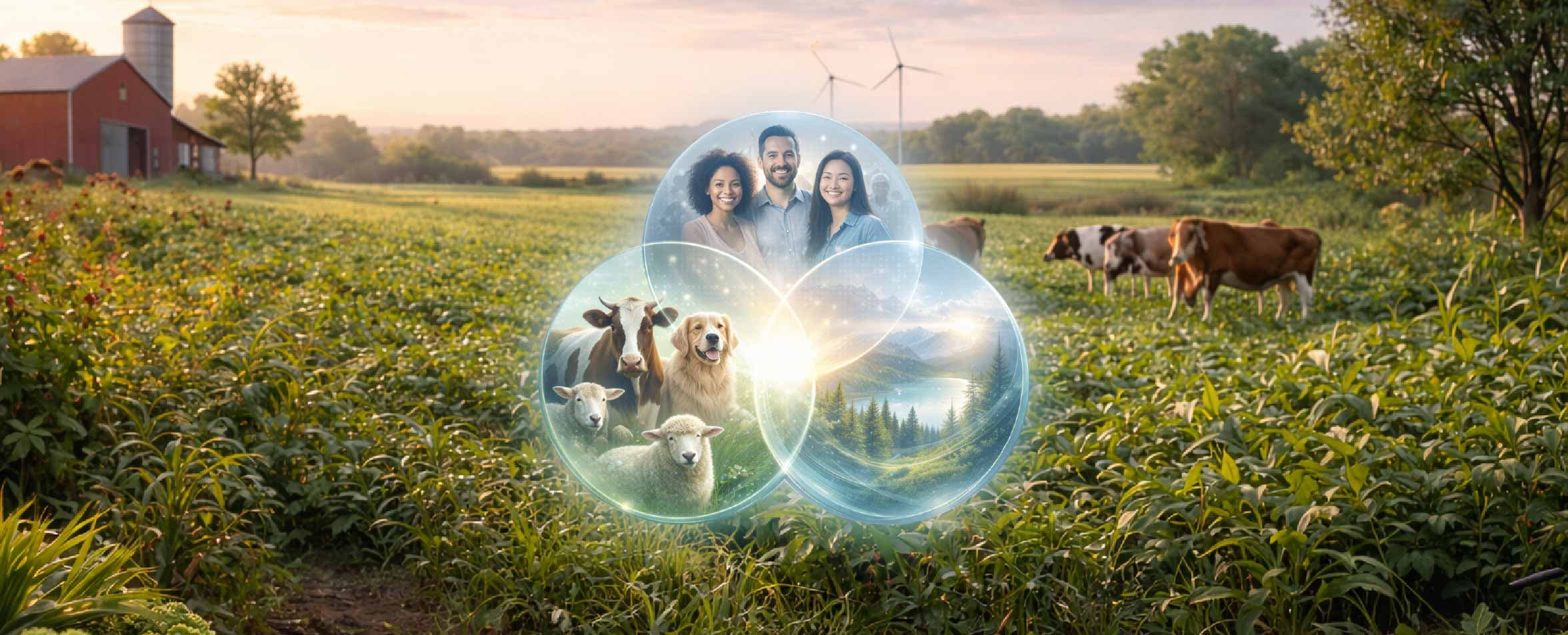
Beyond Agriculture: Why Food Systems, Animal Health, and Human Health Are One System
15 April 2026
Agriculture has traditionally been viewed as a standalone sector-focused on food production and farming practices. But in reality, agriculture is deeply interconnected with broader systems that influence global health, sustainability, and economic stability.
Today, the boundaries between agriculture , animal health, and human health are becoming increasingly blurred. What affects one system inevitably impacts the others.
Understanding this interconnectedness is essential for building resilient and sustainable global food systems.
The Interconnected Nature of Modern Food Systems
Food systems are no longer linear. They are complex, dynamic networks involving:
- Agricultural production
- Animal health management
- Human nutrition and well-being
A disruption in one part of this system-whether it's disease outbreaks, climate stress, or supply chain breakdowns-can have cascading effects across the entire ecosystem.
Agriculture and Animal Health: A Critical Link
Animal health plays a crucial role in agricultural productivity and food security.
Healthy livestock systems contribute to:
- Stable food supply chains
- Safe and high-quality food products
- Economic sustainability for farmers
At the same time, poor animal health can lead to:
- Reduced productivity
- Increased disease transmission
- Economic losses
This makes the integration of animal health into agricultural strategies essential.
The Connection to Human Health
Human health is directly influenced by agricultural practices and food systems.
Key connections include:
- Nutrition and food quality
- Food safety and disease prevention
- Environmental impacts on public health
Issues such as zoonotic diseases, antimicrobial resistance, and nutritional deficiencies highlight how closely human health is tied to agricultural and animal systems.
Why a Systems Approach Is Necessary
Addressing global challenges requires moving beyond isolated solutions.
A systems approach enables:
- Holistic problem-solving
- Better risk management
- Sustainable long-term outcomes
By understanding how these systems interact, stakeholders can develop solutions that are:
- More effective
- More scalable
- More resilient
GARCX and the Integrated Perspective
GARCX is built around this integrated understanding of agriculture.
By bringing together:
- Agriculture
- Animal health
- Food science
It fosters a space where:
- Cross-sector collaboration becomes possible
- Interconnected challenges are addressed holistically
- Innovation is aligned with real-world needs
This integrated perspective reflects the direction in which global agriculture is evolving.
Conclusion
Agriculture, animal health, and human health are not separate systems-they are part of a larger, interconnected ecosystem.
Recognizing and embracing this connection is critical for building sustainable, resilient food systems that can meet the demands of the future.
Be part of a platform that connects agriculture with global health and innovation.
Explore GARCX and engage with a unified ecosystem.
Frequently Asked Questions
The One Health approach connects agriculture, animal health, and human health to create integrated solutions for sustainable and resilient food systems.
They are interdependent systems where changes in one area-such as disease, nutrition, or environment-directly impact the others.
Healthy animals improve productivity, food quality, and supply chain stability, while poor animal health can lead to economic and health risks.
A systems approach enables holistic problem-solving, better risk management, and scalable solutions for global challenges.
SHARE :



Become a Delegate
Attend GARCX Conference as a delegate to gain expert insights, connect with global professionals, and explore cutting-edge solutions in agriculture and animal health.

Become a Speaker
Join global thought leaders at GARCX Conference to share your research and insights. Present your work on integrated agriculture and animal health before an international audience.

Become a Sponsor
Showcase your brand as a pioneer in One Health innovation. Sponsoring GARCX offers high-visibility branding and strategic exposure to industry leaders and researchers.

Publish with Us
Submit your scientific work to be featured in esteemed ARCC Journals. Gain credibility and reach in the global agricultural and veterinary research community.

Become an Exhibitor
Display your solutions, products, or innovations in agriculture and animal health at the GARCX Expo. Network with stakeholders and boost your industry presence.