



14 July 2026
New Technology in Agriculture 2026: What Will Shape the Future of Farming?
Is agriculture ready for the technologies that are already changing its future?
Agriculture is entering one of its most important transformation phases.
The future of farming is no longer only about increasing production. It is about producing food more intelligently, protecting natural resources, improving animal health, reducing risks, strengthening food safety and building systems that can respond to climate and population pressures.
Across the world, new technologies are changing how crops are monitored, how livestock health is protected, how food systems are managed and how decisions are made.
But the bigger question is:
Are these technologies reaching the people, farms and systems that need them most?
This is why 2026 is becoming a critical year for agriculture technology, smart farming, food security and One Health-led innovation.
It is also why global platforms like GARCX 2026 matter now more than ever.
Why New Technology in Agriculture Matters in 2026
Agriculture is facing pressure from many directions at the same time.
- Climate change is affecting crop patterns.
- Water scarcity is becoming a major farming challenge.
- Livestock diseases are creating risks for food security and public health.
- Food systems need better safety, traceability and resilience.
- Farmers need faster and more reliable decision support.
- Researchers need stronger pathways to bring innovation into practice.
- Policymakers and investors need scalable solutions that can create measurable impact.
This means agriculture cannot depend only on traditional methods or isolated innovations.
The future of agriculture will depend on how well technology, science, animal health, food systems, policy and investment work together.
That is where the real opportunity begins.
1. Artificial Intelligence for Better Farming Decisions
Artificial intelligence is becoming one of the most discussed technologies in agriculture.
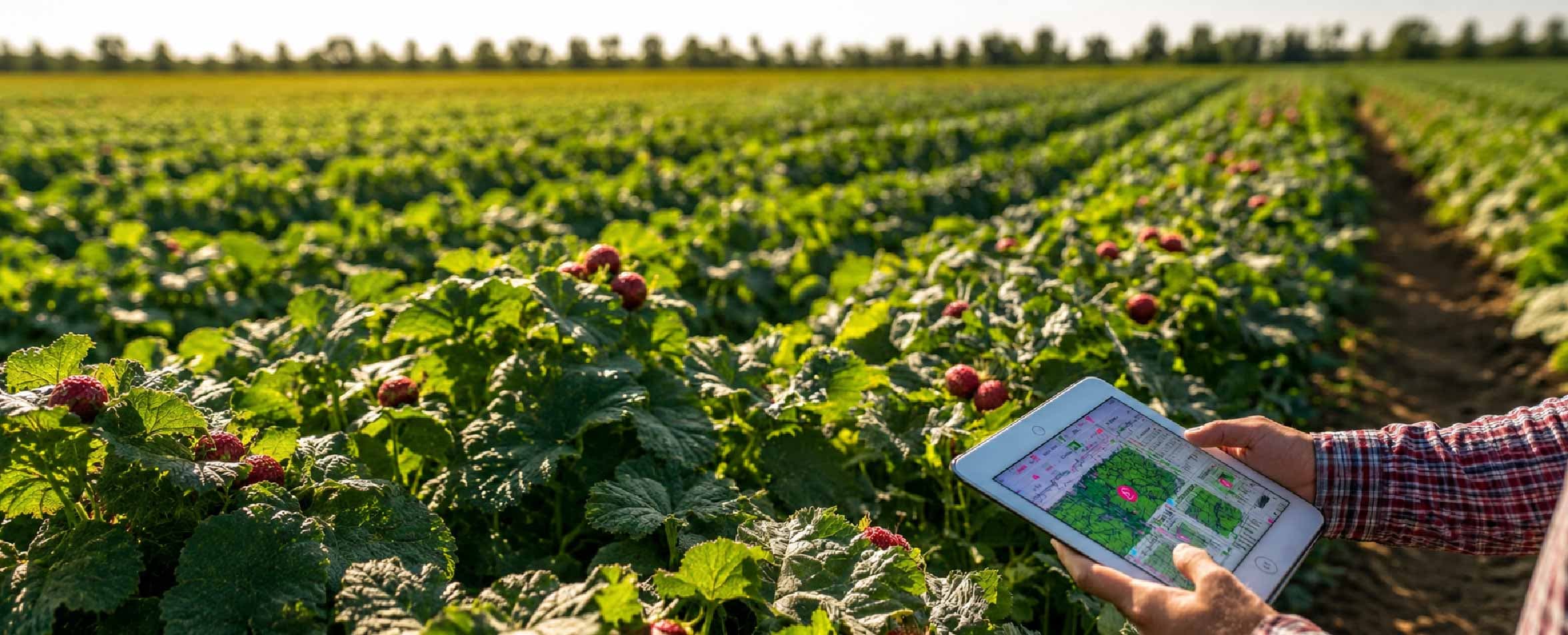
AI can support crop monitoring, yield prediction, pest detection, disease forecasting, irrigation planning and farm-level decision-making.
Instead of waiting for a problem to become visible, AI can help detect risks earlier.
For example, AI-based systems can analyze weather data, soil data, crop images and farm history to support better decisions. This can help farmers reduce losses, manage resources more efficiently and respond faster to changing field conditions.
But AI alone is not enough.
For AI to create real agricultural impact, it must connect with farmers, researchers, advisory systems, policymakers and practical field-level implementation.
That is why discussions around AI in agriculture must move beyond tools and focus on adoption, accessibility and measurable outcomes.
2. Remote Sensing and Satellite Agriculture
Remote sensing and satellite-based monitoring are changing how agricultural land is observed.
These technologies can help monitor crop health, soil moisture, vegetation stress, land use, weather impact and large-scale farming patterns.
For governments, institutions and researchers, satellite agriculture can support better planning and risk assessment.
For farmers and agribusinesses, it can help identify problems before they become major losses.
In 2026, remote sensing will continue to play a stronger role in climate-smart agriculture, precision farming and food security planning.
But again, the question is not only about the technology.
The real question is how this data is translated into timely and practical decisions.
3. Robotics and Automation in Agriculture
Labour shortages, rising production costs and the need for efficiency are increasing interest in robotics and automation.
Agricultural robots can support planting, harvesting, spraying, sorting, monitoring and repetitive farm tasks.
Automation can help reduce labour pressure and improve consistency in agricultural operations.
However, robotics in agriculture must be designed for real farming conditions. It must be affordable, adaptable and relevant to different farm sizes and regions.
The future of robotics in farming will depend not only on advanced engineering, but also on accessibility, training, financing and field-level adoption.
This is where collaboration between innovators, researchers, investors and industry leaders becomes important.
4. Climate-Smart Farming Technologies
Climate resilience is becoming one of the most urgent priorities in agriculture.
New technologies are helping farms respond to changing weather, heat stress, water scarcity and soil degradation.
Climate-smart farming technologies include:
- Smart irrigation systems
- Soil health monitoring tools
- Water-use analytics
- Weather-based advisory platforms
- Drought and heat stress monitoring
- Climate-resilient crop planning
- Resource-efficient production systems
These technologies can help farmers move from reactive farming to predictive farming.
In other words, the goal is not only to respond after damage happens.
The goal is to prepare earlier.
This is one of the major conversations connected to the GARCX 2026 theme, One Health - One Planet: Synergizing Science and Technology for a Sustainable Future. The 2026 agenda also positions climate resilience, sustainable food systems, science, technology and future farming as core discussion areas.
5. Animal Health Surveillance and Biosecurity Technologies
Animal health is now one of the most important parts of future food security.
Livestock diseases, antimicrobial resistance, zoonotic risks and farm-level biosecurity challenges can affect farmers, food systems, public health and trade.
This is why animal health technologies are gaining importance.
These may include:
- Digital livestock monitoring
- Disease surveillance systems
- Diagnostic technologies
- Biosecurity tracking tools
- Early-warning systems
- Farm-level risk assessment platforms
- Veterinary data systems
Animal health cannot be separated from agriculture anymore.
It is directly linked to food safety, nutrition, public health and One Health.
GARCX 2026 has a dedicated focus on Animal Health & One Health, including veterinary innovations, diagnostics, livestock sustainability, AMR prevention and disease surveillance.
6. Food Safety, Traceability and Supply Chain Technologies
The future of agriculture does not end at production.
Food must also be stored, transported, processed and delivered safely.
This is why food safety and traceability technologies are becoming more important.
Modern food systems need better tools to track quality, reduce contamination risks, manage cold chains and improve supply chain visibility.
Traceability can help consumers, businesses and regulators understand where food comes from and how it moves through the system.
Food safety innovation also supports public health, nutrition and consumer trust.
This is why GARCX 2026 also connects agriculture with food safety, nutrition and human health through its One Health-led structure. The agenda includes food safety, nutrition security, functional foods, food processing and consumer health as key areas of discussion.
7. Research-to-Impact Platforms
Technology alone cannot transform agriculture.
It needs research, validation, policy support, investment and collaboration.
Many agricultural technologies remain limited because they do not move from research papers, pilot projects or startup demos into practical adoption.
This is why research-to-impact platforms are becoming essential.
Agriculture needs spaces where researchers, policymakers, industry experts, startups, investors, animal health professionals and food system leaders can work together.
GARCX 2026 is designed around this need.
It brings together scientific sessions, global knowledge exchange, future agriculture discussions, young researcher showcases, poster visibility, networking and collaboration opportunities. The agenda also frames GARCX 2026 as a virtual global conference with 2 days, 8 sessions and impact-led outcomes across agriculture, veterinary, food, health and technology tracks.
Why GARCX 2026 Is Relevant to This Conversation
The future of agriculture will not be shaped by one technology alone.
It will be shaped by the people and systems that connect technology with real-world problems.
That includes:
- Researchers developing new knowledge.
- Farmers and practitioners applying solutions.
- Industry leaders scaling innovation.
- Policymakers shaping enabling systems.
- Investors supporting practical ideas.
- Animal health experts protecting food systems.
- Food system professionals strengthening safety and resilience.
GARCX 2026 brings these conversations together through a One Health and One Planet lens.
For delegates, this is an opportunity to understand where agriculture is heading, connect with global voices, explore emerging research and become part of the conversations shaping the sector’s next phase.
Conclusion: Technology Is Changing Agriculture, But Collaboration Will Decide Its Impact
New technology in agriculture is no longer a future idea.
It is already transforming how food is grown, monitored, protected and delivered.
AI, satellites, robotics, climate-smart tools, animal health surveillance, food safety systems and research-led innovation are all shaping the future of farming.
But the real impact will depend on collaboration.
- Agriculture needs more than innovation.
- It needs connection.
- It needs implementation.
- It needs platforms where science, technology, policy and action meet.
That is why GARCX 2026 is important.
If your work is connected to agriculture, animal health, agricultural technology, food systems, research, sustainability or One Health, this is the time to be part of the global conversation.
Delegate registrations for GARCX 2026 are open.
Be part of the platform connecting agriculture, animal health, science, technology and future food systems.
Frequently Asked Questions
New technologies in agriculture include artificial intelligence, remote sensing, satellite monitoring, robotics, smart irrigation, animal health surveillance, biosecurity systems, food traceability tools and climate-smart farming technologies.
Technology is important because agriculture is facing climate stress, water scarcity, food security challenges, animal health risks and growing demand for safer and more resilient food systems.
Artificial intelligence can help farmers and researchers monitor crops, predict risks, detect diseases, plan irrigation, analyze field data and improve decision-making.
Animal health technology supports disease surveillance, biosecurity, livestock monitoring and early-warning systems. This helps protect food safety, farmer livelihoods and public health.
GARCX 2026 brings together researchers, industry leaders, policymakers, innovators, animal health professionals and food system experts to discuss agriculture technology, One Health, food security, sustainability and future farming.
SHARE :