
 23rd-24th November 2026
 Dusit Thani, Dubai | Hybrid Event
GLOBAL AGROVET RESEARCH CONFERENCE
POWERED BY
ARCC JOURNALS
POWERED BY
ARCC JOURNALS

19 February 2026
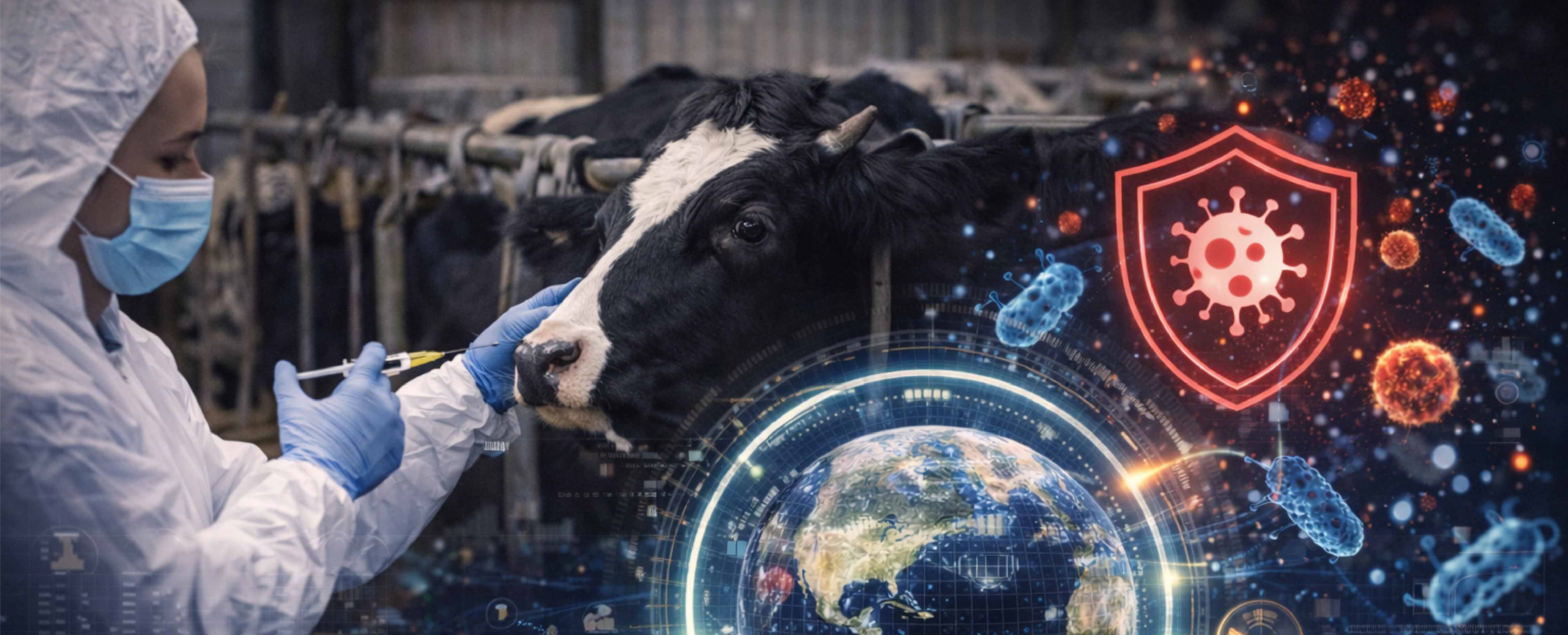
The Growing Threat of Antimicrobial Resistance in Livestock Systems: A One Health Imperative
19 February 2026
Antimicrobial resistance (AMR) is no longer a distant public health concern. It is a rapidly accelerating global challenge that directly affects agriculture, animal health, food safety, and human wellbeing.
Within livestock systems, the responsible use of antibiotics has become one of the most critical conversations shaping the future of sustainable agriculture. As global food demand rises and climate pressures intensify, the intersection between antimicrobial resistance, livestock biosecurity, and food system resilience is becoming central to the One Health framework.
For platforms focused on integrated agriculture and animal science—such as GARCX 2026 —this issue sits at the heart of global agro-veterinary dialogue.
What Is Antimicrobial Resistance (AMR)?
Antimicrobial resistance occurs when bacteria, viruses, fungi, and parasites evolve to resist the effects of medications designed to eliminate them.
In livestock systems, antibiotics are used for:
- Treatment of infections
- Disease prevention
- Growth promotion (in some regions)
- Herd-level disease management
When antibiotics are misused or overused, pathogens can develop resistance. These resistant strains can:
- Spread between animals
- Transfer to humans
- Enter food supply chains
- Circulate through soil and water systems
AMR is therefore not only a veterinary issue — it is a systemic agricultural and environmental issue.
Why AMR in Livestock Is a Global Agriculture Challenge
Livestock production supports global protein supply, rural economies, and food security systems. However, intensive farming systems can create conditions where:
- Disease transmission is rapid
- Preventative antibiotic use becomes common
- Biosecurity gaps increase vulnerability
Without integrated surveillance and responsible antimicrobial stewardship, resistant pathogens can scale beyond farm boundaries.
The implications include:
- Reduced effectiveness of life-saving antibiotics
- Increased animal mortality
- Higher production costs
- Trade restrictions
- Food safety risks
- Public health consequences
This is why antimicrobial resistance is increasingly discussed under the One Health model — connecting agriculture, animal science, environmental health, and human medicine.
The One Health Approach to Antimicrobial Resistance
The One Health framework recognizes that human health, animal health, and environmental health are interconnected.
In livestock systems, AMR management requires coordination between:
- Veterinary professionals
- Agricultural scientists
- Epidemiologists
- Policy regulators
- Food safety authorities
- Environmental researchers
Integrated approaches include:
- Surveillance of antimicrobial use
- Genomic tracking of resistant pathogens
- Farm-level biosecurity improvements
- Alternative disease prevention strategies
- Vaccination programs
- Data-driven livestock monitoring
Interdisciplinary platforms that bring together agriculture and animal health stakeholders are essential to advancing these solutions.
Key Drivers of AMR in Livestock Systems
Understanding antimicrobial resistance requires examining the structural drivers within livestock production.
1. Intensive Production Models
High-density livestock systems can increase disease transmission risk, leading to greater antibiotic reliance.
2. Preventative Use Practices
In some regions, antibiotics are used prophylactically rather than therapeutically.
3. Limited Surveillance Infrastructure
Not all countries maintain robust systems for monitoring antimicrobial use or resistance patterns.
4. Global Trade Networks
Livestock products move across borders, potentially spreading resistant strains internationally.
5. Environmental Transmission
Antibiotic residues and resistant bacteria can enter soil and water systems, creating environmental reservoirs.
These drivers demonstrate that AMR is not a single-sector problem. It is embedded within agricultural systems.
The Role of Surveillance and Data-Driven Livestock Management
Modern livestock biosecurity is increasingly dependent on:
- Real-time monitoring systems
- Predictive disease analytics
- Genomic epidemiology
- AI-enabled pathogen tracking
- Integrated farm management platforms
Smart surveillance systems help:
- Detect disease early
- Reduce unnecessary antibiotic use
- Enable targeted treatment
- Improve herd-level health outcomes
The integration of agriculture technology (AgriTech) with veterinary science is becoming central to antimicrobial resistance mitigation.
Sustainable Livestock Systems and Reduced Antibiotic Dependence
Reducing AMR risk does not mean compromising productivity. It means strengthening resilience.
Sustainable livestock systems prioritize:
- Improved animal welfare
- Better housing conditions
- Bio secure farm infrastructure
- Vaccination-led disease prevention
- Nutritional optimization
- Precision health monitoring
When animal health improves, antibiotic dependency naturally decreases.
This shift aligns with broader sustainable agriculture goals — including food safety, climate resilience, and long-term farm viability.
Why Antimicrobial Resistance Matters for Food Security
Food security is not only about production volume. It is also about:
- Safety
- Stability
- Sustainability
- Public trust
If antimicrobial resistance continues to escalate, it may:
- Disrupt supply chains
- Increase veterinary costs
- Reduce export capacity
- Undermine consumer confidence
- Impact long-term protein availability
Addressing AMR within livestock systems is therefore a food system stability issue.
Policy and Regulatory Alignment in AMR Management
Effective AMR mitigation requires:
- Coordinated national policies
- Veterinary prescription regulations
- International reporting standards
- Responsible antimicrobial stewardship frameworks
- Cross-sector collaboration
Countries investing in integrated agriculture and animal health strategies are better positioned to manage resistance risks.
The UAE, for example, has increasingly strengthened coordination between agriculture authorities, veterinary services, and food safety regulators—reflecting the global shift toward integrated livestock biosecurity systems.
Why Interdisciplinary Platforms Matter
Conversations around antimicrobial resistance require more than technical reports.
They require:
- Knowledge exchange
- Policy dialogue
- Research dissemination
- Industry participation
- Cross-border collaboration
Global agro-veterinary forums that integrate sustainable agriculture, animal science, and food security discussions provide space for addressing AMR within a broader systems context.
GARCX 2026 as a global AgroVet research platform, operates within this convergence model — where livestock biosecurity, sustainable farming, food innovation, and One Health strategies are examined collectively rather than in isolation.
The Future of Antimicrobial Stewardship in Agriculture
The future direction of AMR management in livestock systems is likely to include:
- Greater adoption of precision livestock farming
- Genomic-based disease diagnostics
- AI-driven early warning systems
- Alternative therapeutics
- Strengthened biosecurity standards
- Enhanced global surveillance collaboration
The shift is from reactive treatment to predictive prevention.
This transformation reflects the broader evolution of agriculture toward technology-enabled resilience.
Conclusion: AMR Is a Structural Agriculture Challenge
Antimicrobial resistance in livestock systems is not an isolated veterinary issue.
It is:
- A sustainable agriculture issue
- A food safety issue
- A climate resilience issue
- A policy coordination issue
- A One Health issue
As global agriculture adapts to environmental and epidemiological pressures, managing antimicrobial resistance will remain central to ensuring long-term food system stability.
The integration of research, policy, and technology — across agriculture and animal health
— will define how effectively the world responds.
Frequently Asked Questions
Antimicrobial resistance (AMR) in livestock occurs when bacteria in farm animals evolve to survive antibiotic treatment. This reduces the effectiveness of medicines used to treat infections in animals and can impact human health and food systems.
AMR threatens food security because it: • Increases livestock disease and mortality • Raises production and veterinary costs • Reduces export competitiveness • Disrupts protein supply chains • Weakens consumer confidence in food safety When antibiotics lose effectiveness, livestock productivity declines.
AMR can spread through: • Contaminated meat or animal products • Direct contact with animals • Water and soil contamination • Global trade networks This cross-sector transmission is why AMR is addressed under the One Health framework.
No. Responsible and targeted antibiotic use is essential for animal welfare. The solution is optimized use — not total elimination — supported by strong veterinary oversight and stewardship frameworks.
Future trends include: • Stronger global surveillance networks • Policy harmonization across borders • Precision livestock farming adoption • Alternative therapeutics development • AI-driven early warning systems The shift is toward prevention-led, data-driven livestock systems.
SHARE :



Become a Delegate
Attend GARCX Conference as a delegate to gain expert insights, connect with global professionals, and explore cutting-edge solutions in agriculture and animal health.

Become a Speaker
Join global thought leaders at GARCX Conference to share your research and insights. Present your work on integrated agriculture and animal health before an international audience.

Become a Sponsor
Showcase your brand as a pioneer in One Health innovation. Sponsoring GARCX offers high-visibility branding and strategic exposure to industry leaders and researchers.

Publish with Us
Submit your scientific work to be featured in esteemed ARCC Journals. Gain credibility and reach in the global agricultural and veterinary research community.

Become an Exhibitor
Display your solutions, products, or innovations in agriculture and animal health at the GARCX Expo. Network with stakeholders and boost your industry presence.