
 23rd-24th November 2026
 Dusit Thani, Dubai | Hybrid Event
GLOBAL AGROVET RESEARCH CONFERENCE

POWERED BY
ARCC JOURNALS
POWERED BY
ARCC JOURNALS

28 April 2026
Sustainable Agriculture Isn’t Failing — Integration Is
Sustainable agriculture has become a central focus of global and regional strategies, particularly in climate-sensitive regions such as the Middle East.
Governments, research institutions, and industry stakeholders are investing in AgriTech, climate-resilient agriculture, and food security systems to address increasing environmental and resource pressures.
However, despite this momentum, a critical structural gap continues to limit long-term impact.
Integration.The Fragmentation Challenge in Modern Agriculture
Agriculture today does not operate in isolation.
- Crop production depends on water availability and soil health.
- Livestock productivity is influenced by climate conditions and disease exposure.
- Food systems are shaped by supply chains, biosecurity, and environmental stability.
Yet, these domains are often managed separately.
This fragmentation reduces the effectiveness of sustainability initiatives and limits system-wide resilience.
The need for integration becomes clearer when examining how food systems, animal health, and human health are interconnected.
Why Integration Matters More Than Innovation
Innovation continues to drive progress in agriculture.
Technologies such as:
- Precision farming
- Smart irrigation systems
- Controlled environment agriculture
- Digital livestock monitoring
are improving efficiency and productivity.
However, innovation alone cannot address systemic challenges.
Without integration:
- Technological gains remain isolated
- Policy interventions remain fragmented
- Long-term sustainability outcomes remain uncertain
Sustainable agriculture requires coordination across systems — not just advancement within them.
The Role of One Health in Sustainable Agriculture
The One Health framework provides a structured approach to integration by recognizing the interdependence of:
- Human health
- Animal health
- Environmental systems
In agricultural contexts, this translates into:
- Coordinated crop and livestock management
- Integrated disease surveillance and biosecurity systems
- Sustainable water and soil resource management
- Cross-sector policy alignment
This approach is particularly relevant in arid and semi-arid regions, where environmental pressures directly impact agricultural productivity and food security.
Why the Middle East Needs Integration
- Limited arable land
- High dependence on food imports
- Chronic water scarcity
- Rising temperatures
- Increasing biosecurity risks
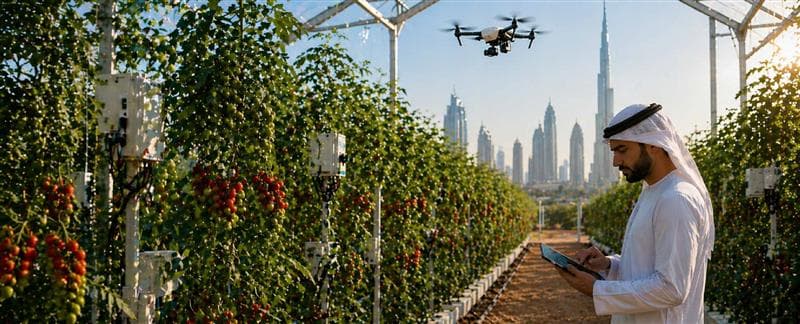
Countries such as the UAE are actively investing in climate-resilient agriculture, controlled environment farming, smart irrigation technologies, and livestock health systems.
These efforts are significant — but their impact depends on how effectively they are integrated across sectors.
From Innovation to System-Level Coordination
- Aligning agricultural practices with environmental sustainability goals
- Integrating animal health into food security strategies
- Bridging research with policy implementation
- Enabling collaboration across institutions, industry, and government
This reflects a broader transition from technology-led solutions to system-level thinking.
The Role of Integrated Platforms and Knowledge Exchange
As agricultural systems become more complex, structured platforms for collaboration are becoming increasingly important.
- Exchange of evidence-based insights
- Alignment between policy and industry
- Cross-sector collaboration
Events such as GARCX 2026 contribute to this ecosystem by bringing together stakeholders across agriculture, animal health, and environmental sustainability under the One Health framework.
These platforms support the transition from fragmented discussions to coordinated action.
Strategic Implications for Sustainable Agriculture
For sustainable agriculture to deliver measurable and long-term outcomes, integration must become a foundational principle.
- For policymakers: Develop coordinated frameworks that connect agriculture, health, and environmental systems.
- For researchers: Focus on interdisciplinary research with practical, real-world applications.
- For industry stakeholders: Adopt integrated solutions that improve efficiency across the value chain.
- For investors: Support scalable models that reduce systemic risk and enhance resilience.
Conclusion
Sustainable agriculture is not failing due to a lack of innovation.
It is constrained by a lack of integration.
In regions such as the Middle East, where environmental, economic, and food system challenges are closely interconnected, isolated solutions are insufficient.
A system-level approach — supported by frameworks like One Health — is essential for building resilient and sustainable agricultural systems.
Frequently Asked Questions
Integration ensures that agriculture, animal health, and environmental systems are managed together, improving efficiency, reducing risks, and enabling long-term sustainability.
One Health connects human, animal, and environmental health, enabling coordinated strategies for disease control, food security, and climate resilience.
Key challenges include water scarcity, climate stress, limited arable land, and high dependence on food imports.
No. While technology improves efficiency, integration across systems is necessary to achieve long-term resilience and impact.
SHARE :



Become a Delegate
Attend GARCX Conference as a delegate to gain expert insights, connect with global professionals, and explore cutting-edge solutions in agriculture and animal health.

Become a Speaker
Join global thought leaders at GARCX Conference to share your research and insights. Present your work on integrated agriculture and animal health before an international audience.

Become a Sponsor
Showcase your brand as a pioneer in One Health innovation. Sponsoring GARCX offers high-visibility branding and strategic exposure to industry leaders and researchers.

Publish with Us
Submit your scientific work to be featured in esteemed ARCC Journals. Gain credibility and reach in the global agricultural and veterinary research community.

Become an Exhibitor
Display your solutions, products, or innovations in agriculture and animal health at the GARCX Expo. Network with stakeholders and boost your industry presence.