


26 November 2026
GARCX 2026: Advancing Global Research, One Health and Sustainable Agriculture Through International Collaboration
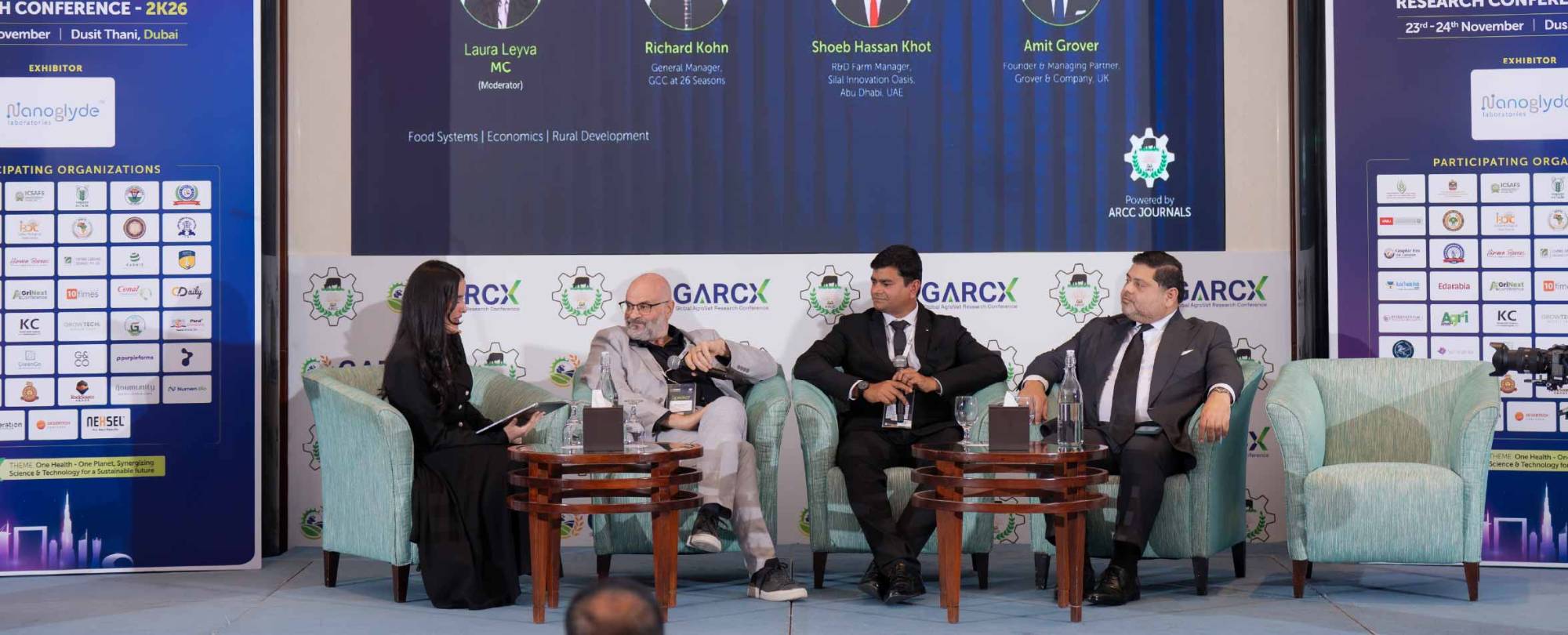
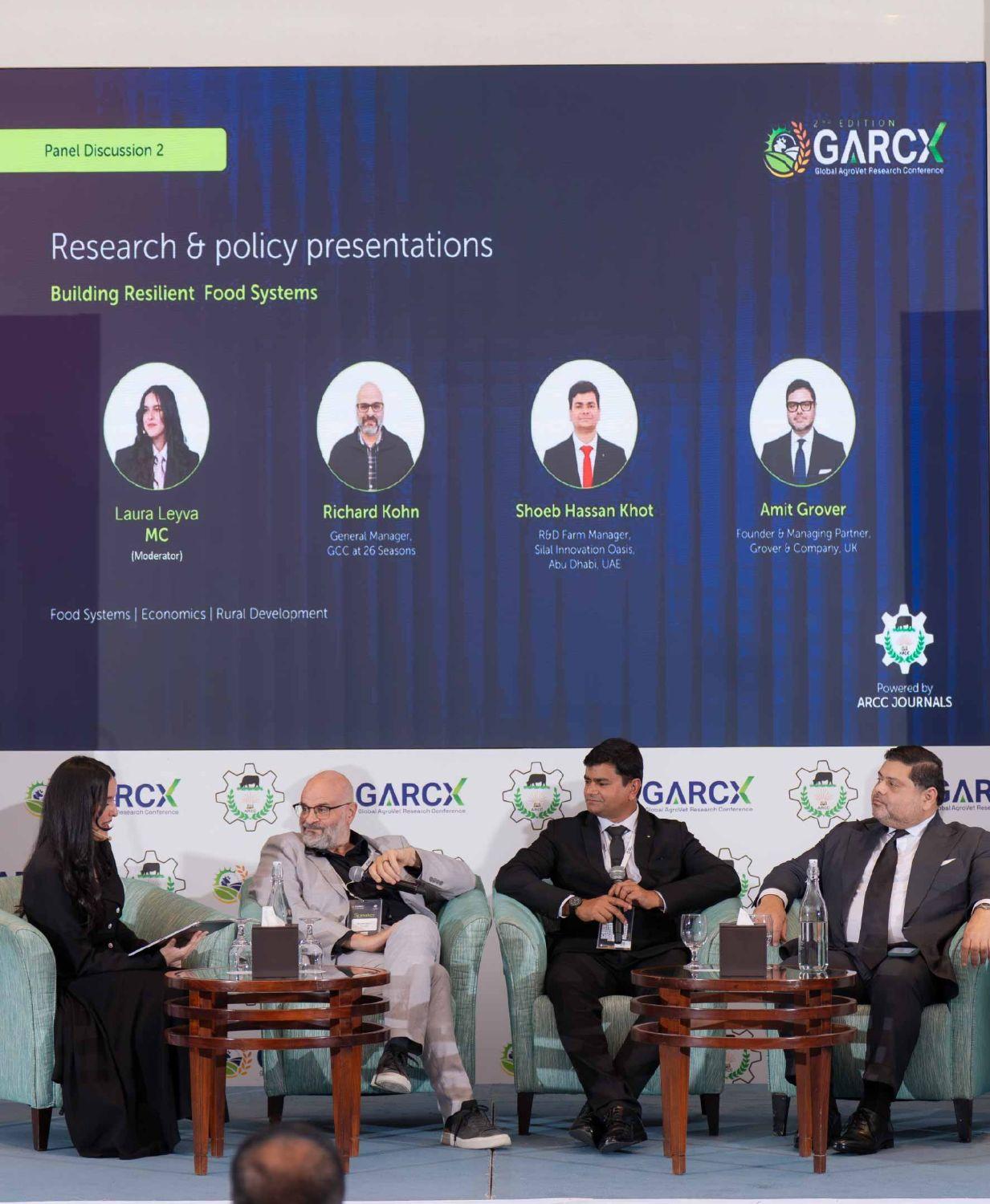
The Global AgroVet Research Conference (GARCX) 2026 concluded on 24 November 2026 at Dusit Thani Dubai, following two days of interdisciplinary dialogue, scientific exchange and professional engagement. Held on 23–24 November under the theme “One Health – One Planet: Synergizing Science and Technology for a Sustainable Future,” the conference brought together researchers, academic institutions, industry professionals, innovators and other stakeholders through an integrated hybrid platform.
Powered by the Agricultural Research Communication Centre (ARCC Journals), GARCX 2026 connected in-person participation in Dubai with virtual engagement, extending the opportunity for knowledge exchange across geographical and professional boundaries.
The conference addressed a central challenge facing modern agriculture and allied sciences: how can research, technology, policy and industry work together to build more resilient agricultural systems, strengthen food security and support the interconnected health of people, animals and the environment?
Its programme explored this question through discussions spanning sustainable agriculture, food systems, veterinary science, animal health, human health, aquaculture, investment, policy and emerging technologies.
GARCX 2026: A Hybrid Platform for Global Research and Knowledge Exchange
International research collaboration increasingly requires platforms that connect scientific communities, academic institutions, policymakers and industry. GARCX 2026 brought these perspectives together through a hybrid conference format, combining on-site engagement at Dusit Thani Dubai with virtual participation.
The format supported a broader model of academic and professional exchange, allowing discussions to extend beyond the physical conference venue. It also reflected the growing importance of accessible international platforms for research communication, interdisciplinary engagement and the exchange of scientific perspectives.
The conference’s focus extended beyond individual sectors. It approached agriculture, animal health, food systems and environmental sustainability as interconnected areas requiring coordinated research, technological development and informed policy.
The One Health Framework: Connecting Human, Animal and Environmental Health
The central theme of GARCX 2026, One Health – One Planet: Synergizing Science and Technology for a Sustainable Future, reflects the growing relevance of integrated approaches to global health and sustainability.
The One Health framework recognises that human health, animal health and environmental health are closely connected. Food production systems, livestock management, agricultural practices, environmental conditions and public health are therefore not independent concerns.
Challenges such as zoonotic diseases, antimicrobial resistance (AMR), foodborne risks, climate variability, biodiversity pressures and changing patterns of food production demonstrate the need for collaboration across scientific disciplines.
An integrated One Health approach brings together veterinary professionals, agricultural scientists, medical and public health researchers, environmental specialists, policymakers and industry stakeholders. It supports stronger disease surveillance, risk assessment, food safety systems, responsible resource management and evidence-based decision-making.
GARCX 2026 placed this interconnected perspective at the centre of its conference agenda, encouraging dialogue across the disciplines that contribute to sustainable development.
Key Research and Technology Themes Explored at GARCX 2026
The conference programme was structured around interconnected research and industry themes, reflecting the technical and policy challenges shaping the future of agriculture and allied sciences.
1. Sustainable Agriculture, Regenerative Farming and Climate Resilience
Agricultural systems face increasing pressure from climate variability, soil degradation, water constraints and changing production requirements. Building resilience requires approaches that improve productivity while maintaining the long-term health of natural resources.
Discussions around sustainable farming and food systems addressed areas including:
- Regenerative agriculture and soil health management.
- Climate-smart and climate-resilient crop production.
- Sustainable fertilisers and biofertilisers.
- Resource-efficient farming practices.
- Food security under climate stress.
- Sustainable agricultural production systems.
These areas are relevant to the development of farming models that improve soil function, strengthen ecosystem resilience and support more reliable food production.
2. Artificial Intelligence, AgriTech and Digital Transformation
Digital technologies are changing how agricultural systems are monitored, managed and optimised. Their application extends from field-level decision-making to broader agricultural planning and resource management.
The science and technology themes at GARCX 2026 included:
- Artificial intelligence (AI) in agriculture.
- Precision agriculture and smart farming.
- Remote sensing and satellite-based agricultural monitoring.
- Internet of Things (IoT) applications.
- Robotics and agricultural automation.
- Agricultural biotechnology and crop improvement.
- Data-driven agricultural decision-making.
The wider significance of these technologies lies in their potential to support predictive analysis, improve operational efficiency, strengthen resource management and help translate agricultural research into practical applications.
3. Food Security, Agricultural Investment and Policy
Food security is influenced by more than agricultural production. It also depends on resilient supply chains, economic accessibility, investment, infrastructure, trade, institutional capacity and effective policy frameworks.
GARCX 2026 addressed this broader perspective through themes including:
- Global food security and food sovereignty.
- Resilient food supply systems.
- Agricultural investment and financing.
- Public-private partnerships.
- Agricultural economics and rural transformation.
- Evidence-based food security planning.
- Research translation and policy development.
Connecting agricultural research with investment and policy is important for moving innovations beyond laboratories and pilot projects towards wider adoption and measurable application.
4. Animal Health, Veterinary Science and One Health Integration
Animal health is fundamental to sustainable livestock production, food safety, public health and agricultural resilience. Veterinary research also plays a critical role in preventing and managing infectious diseases and addressing emerging biological risks.
The conference’s animal health and veterinary science themes included:
- Veterinary diagnostics and disease prevention.
- Vaccination technologies.
- Livestock sustainability and animal welfare.
- Animal nutrition and production systems.
- Antimicrobial resistance and integrated disease surveillance.
- Veterinary innovation and field-level applications.
These research areas contribute to stronger animal health systems and reinforce the role of veterinary science within the wider One Health framework.
5. Aquaculture, Blue Food Systems and Resource Sustainability
Aquaculture is an increasingly important component of global food production and nutrition. Its future development requires responsible resource use, aquatic animal health management and environmentally sustainable production systems.
Relevant technical areas include:
- Sustainable aquaculture practices.
- Fish health management.
- Aquatic animal nutrition.
- Marine biotechnology.
- Water quality management.
- Circular resource utilisation.
- Blue economy development.
Research and innovation in these areas can support more resilient aquatic food systems and contribute to diversified sources of food and nutrition.
6. Human Health, Food Safety and Nutrition
Agriculture and food systems have a direct relationship with public health. Food quality, production practices, processing technologies and supply-chain management all influence the safety and nutritional value of food.
The programme also connected agricultural and food-system discussions with areas such as:
- Food safety technologies and quality management.
- Nutrition security and functional foods.
- Food processing innovations.
- Food contamination control.
- Consumer health and public health protection.
- Integrated approaches to food production and nutrition.
This connection is essential to understanding food security as more than the availability of food: it also involves food safety, nutritional quality and access to healthier food systems.
Institutional and Industry Participation at GARCX 2026
GARCX 2026 brought together a broad institutional and professional ecosystem spanning research, higher education, agriculture, veterinary science, technology, investment and media.
The official GARCX 2026 event-partner listings identify the following organisations across its supporting, participating and media partner categories.
Supporting Organisations
- International Conference on Sustainable Agriculture and Food Safety 2026
- Parul University
- Graphic Era Hills University
- Microbiologists Society
- Himara Berries
- Indian Council of Agricultural Research (ICAR)
- Living Green Organics
- KARMIC Empowering Circularity
- Amity University
- NanoGlyde Laboratories
Participating Organisations
- United Arab Emirates University
- G S Foundation for Research, Education and Development
- Indian Veterinary Research Institute
- Pegasus Capital Investments – Empowering Investments Worldwide
- Safranatolia
- GreenGo Agro Technologies Pvt. Ltd.
- All India Institute of Ayurveda (AIIA)
- Indian Biological Data Centre (IBDC)
- Grover & Company
- Purple Farms
- AFCFTA Roundtable
- Living Green Organics
- Salam Kisan
- University of California, Berkeley
- DE3PBIO (By The Live Green Group Inc)
- Anhalt University of Applied Sciences – Animal Production
- Amity University Rajasthan, Jaipur
Media Partners
- Asia Trade Hub
- Edarabia
- Veterinary Association of India
- Pashudhan Praharee
- AgriNext Conference 2026
- Ten Times
- Conal Conference Alerts
- Conferences Daily
- International Business Magazine
- Agri Business Review
- Kind Congress
- Grow Tech Middle East
This institutional and industry representation reflects the breadth of the communities connected to the GARCX platform. Academic and research organisations, industry participants and media networks each contribute different perspectives to the wider conversation around agricultural innovation, scientific communication and sustainable development.
Connecting Scientific Research with Industry and Policy
One of the continuing challenges across agricultural and allied sciences is translating research into practical applications.
Scientific findings can contribute to meaningful change when they are connected with the organisations, technologies, investments and policy mechanisms required for implementation. This requires stronger communication between researchers, universities, government bodies, industry professionals, entrepreneurs and investors.
GARCX provides a platform for this type of cross-sector engagement. Its focus on agriculture, veterinary sciences, food systems, investment, policy and technology recognises that complex challenges require coordinated responses rather than isolated solutions.
The hybrid conference format further supports this objective by creating opportunities for knowledge exchange among participants who may not otherwise be able to engage through a single physical meeting.
The Continuing Relevance of Global Research Collaboration
The future of agriculture and allied sciences will be shaped by the ability to respond to interconnected challenges through research, innovation and collaboration.
Climate resilience, sustainable food production, animal health, public health, digital transformation and responsible resource management are increasingly linked. Progress in one area can influence outcomes in another, making interdisciplinary research and institutional cooperation essential.
The conclusion of GARCX 2026 marks the continuation of a wider effort to strengthen communication across the global agricultural and scientific community. Through its hybrid format and cross-sector focus, the conference brought together perspectives that contribute to a more integrated understanding of sustainability, food systems and One Health.
As research priorities and technological capabilities continue to evolve, platforms that connect scientific knowledge with policy, industry and practical application will remain important to the development of resilient and sustainable systems.
About the Global AgroVet Research Conference (GARCX)
The Global AgroVet Research Conference (GARCX) is an international conference platform connecting researchers, academicians, industry professionals, policymakers, investors and innovators across agriculture, veterinary sciences, animal and human health, food systems, aquaculture, science and technology.
Powered by the Agricultural Research Communication Centre (ARCC Journals), GARCX encourages interdisciplinary dialogue, research communication and collaboration around the challenges shaping sustainable agriculture and global food systems.
About Agricultural Research Communication Centre (ARCC Journals)
The Agricultural Research Communication Centre (ARCC) was established in 1967 to support communication and collaboration in agricultural and allied research. Through its scholarly publishing activities and academic initiatives, ARCC supports the dissemination of scientific knowledge across agriculture, veterinary, dairy, food and related research disciplines.
Learn more at the official website: arccjournals.com.
View the agenda or review registration details.
Frequently Asked Questions
GARCX 2026, or the Global AgroVet Research Conference 2026, is an international conference focused on agriculture, veterinary sciences, animal and human health, food systems, aquaculture, science, technology and One Health.
GARCX 2026 took place on 23–24 November 2026 at Dusit Thani Dubai, United Arab Emirates.
GARCX 2026 was held in a hybrid format, combining in-person participation in Dubai with virtual participation and global access.
The official theme was “One Health – One Planet: Synergizing Science and Technology for a Sustainable Future.”
The conference programme covered sustainable agriculture, regenerative farming, climate resilience, artificial intelligence in agriculture, precision farming, food security, investment and policy, animal health, veterinary science, aquaculture, food safety, nutrition and One Health.
The official GARCX 2026 event-partner listings include supporting organisations, participating organisations and media partners from academic, research, industry and professional communities. These include ICAR, United Arab Emirates University, Indian Veterinary Research Institute, University of California, Berkeley, Amity University, Parul University, Salam Kisan, DE3PBIO, Grover & Company and several other organisations listed in this article.
GARCX is powered by the Agricultural Research Communication Centre (ARCC Journals), an organisation established in 1967 to support agricultural and allied scientific research communication.
Share :