



14 September 2026
Blue Food and the Future of Food Security: Why Aquaculture Deserves a Bigger Role
Blue food is becoming an increasingly important part of the global food-security conversation. Aquatic foods can contribute to nutrition, dietary diversity, livelihoods and resilient food systems, while aquaculture provides an important pathway for producing these foods.
But the future of aquaculture is not simply about producing more fish.
It is about building productive, healthy, sustainable and resilient aquatic food systems that can respond to changing environmental conditions, growing food demand, disease risks, resource constraints and evolving consumer needs.
This is why aquaculture increasingly intersects with agriculture, animal health, nutrition, environmental sustainability, technology and policy.
What Is Blue Food?
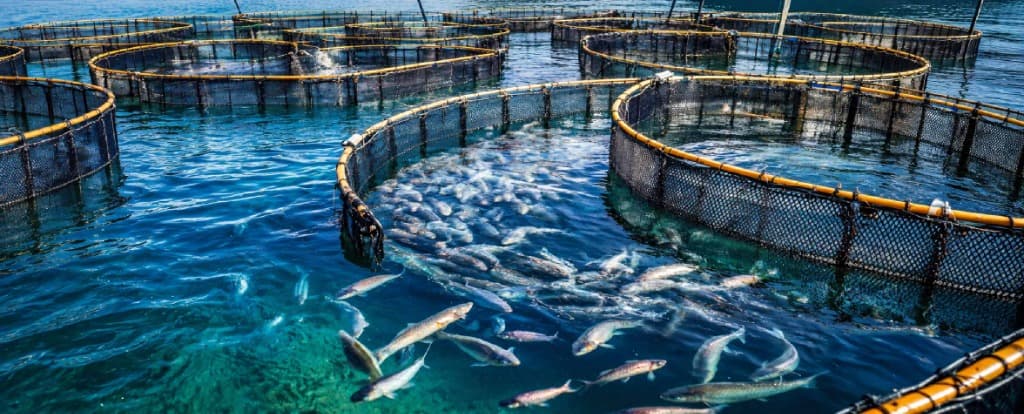
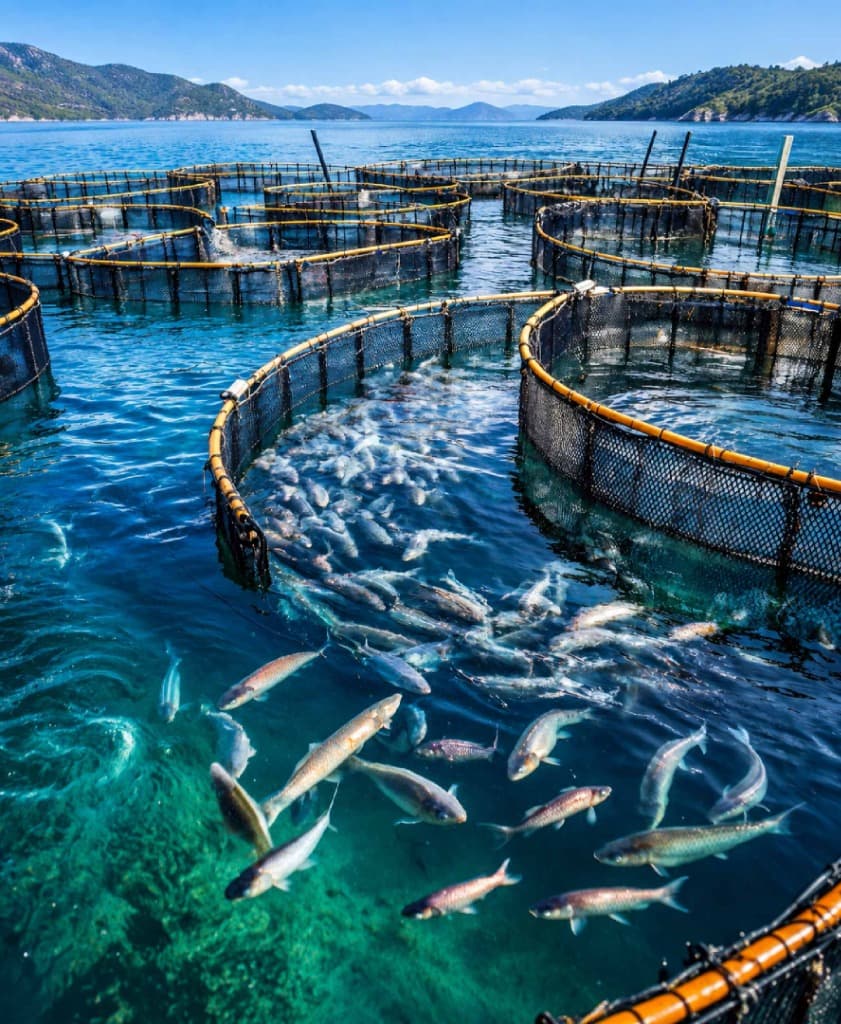
Blue food refers broadly to food derived from aquatic environments, including fish and other aquatic animals and organisms produced through aquaculture or harvested from capture fisheries.
The term is increasingly used in discussions about sustainable food systems because aquatic foods connect several important dimensions of food security: nutrition, production, livelihoods, ecosystems and resource management.
Aquaculture is particularly significant because it provides a managed pathway for producing aquatic foods.
However, understanding its contribution requires looking beyond production volumes. The long-term role of aquaculture depends on factors such as:
- Aquatic animal health
- Water quality
- Feed and nutrition
- Disease prevention and biosecurity
- Environmental management
- Resource efficiency
- Technology adoption
- Economic viability
- Food safety and traceability
In other words, blue food is not simply a production category. It is part of a wider food-system conversation.
Why Is Aquaculture Important for Food Security?
Aquaculture can contribute to food security by diversifying food production, supporting access to nutrient-rich foods and creating livelihoods across aquatic food value chains.
Food security depends on more than producing sufficient quantities of food. Food systems also need to support access, nutrition, stability and resilience.
This makes diversification increasingly important.
Agricultural systems face multiple pressures, including environmental variability, resource constraints and changing production conditions. Aquaculture can provide another pathway for food production while creating economic opportunities for producers, workers and businesses connected to aquatic food systems.
The opportunity, however, is not simply to expand aquaculture.
The bigger question is:
“How can aquaculture grow while maintaining aquatic animal health, environmental responsibility, food safety and long-term resilience?”
That question will shape the next phase of aquaculture development.
How Does Aquaculture Support a More Resilient Food System?
A resilient food system needs multiple production pathways rather than depending on a single model.
Aquaculture can contribute to this diversity by adding aquatic food production to the broader portfolio of food systems.
Its resilience depends on the ability of production systems to manage changing environmental conditions, disease risks, water availability, feed requirements and market pressures.
This means the future of aquaculture will increasingly require collaboration between disciplines that have traditionally operated separately.
Researchers, producers, aquatic animal-health specialists, food scientists, technology developers and policymakers all have a role to play.
The strongest aquatic food systems will be those that connect production efficiency with health, environmental management and long-term adaptability.
Why Is Aquatic Animal Health Important?
Aquatic animal health is fundamental to productive and reliable aquaculture systems.
Disease outbreaks, poor water conditions and inadequate management can affect animal welfare, productivity, farm economics and the stability of aquatic food production.
Health management therefore cannot be treated as an isolated technical function.
Prevention, surveillance, early detection, biosecurity and responsible disease management can all contribute to healthier production systems.
This also creates a direct connection between aquaculture and the broader One Health perspective, where animal health, human health and environmental conditions are considered interconnected.
The principle is straightforward:
Healthier aquatic production systems can support more resilient aquatic food systems.
Why Does Water Quality Matter in Aquaculture?
Water is more than the environment in which aquatic animals live. Water quality is a core component of aquaculture production infrastructure.
Temperature, oxygen availability and other environmental conditions can influence aquatic animal health, growth and system performance.
Monitoring these conditions can therefore help producers identify changes earlier and make better-informed management decisions.
This is where technology becomes increasingly valuable.
Sensors, monitoring systems and digital tools can help collect and interpret environmental and production data, creating opportunities to move from reactive management toward more preventive approaches.
The objective is not technology for its own sake.
It is better information at the point where decisions need to be made.
How Is Technology Changing Aquaculture?
Technology is helping aquaculture become more measurable, connected and data-informed.
Depending on the production system, digital technologies can support:
- Monitoring of water and environmental conditions
- Production and operational tracking
- Automated or semi-automated processes
- Disease surveillance
- Early-warning systems
- Data-based decision-making
- Traceability across supply chains
- Resource-use optimisation
Artificial intelligence and advanced analytics may further support the identification of patterns in production and environmental data.
However, successful aquaculture innovation is not determined by how sophisticated a technology appears.
The most valuable technology is technology that solves a real production problem, generates useful information and can be integrated into everyday operations.
This distinction will become increasingly important as aquaculture moves toward more technology-enabled production systems.
What Does Sustainable Aquaculture Mean?
Sustainable aquaculture means balancing food production with environmental responsibility, aquatic animal health, resource efficiency, economic viability and long-term resilience.
Production efficiency alone does not automatically make a system sustainable.
Aquaculture systems must consider questions such as:
- How efficiently are water and other resources being used?
- How are aquatic animal diseases prevented and managed?
- How are feed requirements being addressed?
- How are waste and environmental impacts managed?
- Can the production model remain economically viable?
- Can the system adapt to changing environmental conditions?
These questions highlight why sustainability should be viewed as a systems challenge rather than a single production target.
The future of aquaculture will depend on finding better ways to balance productivity, profitability, health and environmental performance.
What Role Does Aquaculture Play in Nutrition?
The blue-food conversation is also a nutrition conversation.
Aquatic foods can contribute to dietary diversity and provide important nutrients, although nutritional characteristics vary across species, production systems and preparation methods.
This creates opportunities for collaboration between aquaculture researchers and experts working in:
- Nutrition
- Food science
- Food safety
- Processing
- Public health
- Consumer behaviour
- Sustainable food systems
A more complete understanding of blue food therefore requires looking across the entire value chain—from production and health to processing, distribution and consumption.
Why Are Biosecurity and Disease Management Critical for Aquaculture?
Biosecurity is an essential component of responsible aquaculture because disease can affect animal health, productivity, economic performance and food-system reliability.
As aquaculture systems become more connected, disease prevention and surveillance become increasingly important.
Effective approaches can include:
- Prevention through appropriate management and biosecurity practices.
- Surveillance to identify emerging health risks.
- Early detection to enable faster intervention.
- Responsible response to minimise wider impacts.
- Data sharing and collaboration to strengthen understanding of disease patterns.
These approaches reinforce the need to connect aquatic animal health with environmental management, food safety and wider One Health thinking.
What Will the Future of Aquaculture Look Like?
The next generation of aquaculture is likely to be shaped by the convergence of biology, data, engineering, environmental science and policy.
Key areas of innovation include:
1. Smarter monitoring
Sensors and connected systems can provide more continuous information about water, environmental and production conditions.
2. Better aquatic animal health management
Improved surveillance, diagnostics, nutrition and disease-prevention strategies can support healthier production.
3. Data-driven disease surveillance
Analytical tools can help identify patterns and support earlier responses to emerging risks.
4. More efficient resource use
Innovation can help producers improve the efficiency of water, feed, energy and other inputs.
5. Greater traceability
Digital records can improve visibility across aquatic food supply chains and support greater transparency.
6. Environmental-production integration
Future systems will increasingly need to connect environmental data with production decisions.
7. Aquatic biotechnology
Advances in biotechnology may create new opportunities across aquatic animal health, nutrition, genetics and production.
8. Cross-sector collaboration
Researchers, producers, technology companies, investors and policymakers will need to work together to translate innovation into scalable solutions.
Blue Food and One Health: Why the Connection Matters
Aquaculture demonstrates why food-system challenges cannot always be addressed within disciplinary boundaries.
Aquatic animal health can influence production. Production affects food availability and livelihoods. Food systems influence nutrition and food security. Aquaculture also interacts with water resources and aquatic ecosystems.
These relationships make One Health thinking particularly relevant to the future of aquatic food systems.
A One Health approach encourages collaboration across human, animal and environmental health rather than treating each as a separate issue.
For aquaculture, that means considering production, health, ecosystems, food safety and human well-being as interconnected parts of the same system.
Why Blue Food Deserves a Bigger Role in Food-Security Planning
The global food system will need to become more diverse, resilient and adaptive.
Aquaculture is not a standalone solution to food security. Nor should blue food be positioned as a replacement for terrestrial agriculture.
Its importance lies in its ability to complement other food-production systems.
A stronger food-security strategy can bring together agriculture, aquaculture, livestock, food science, nutrition, technology and environmental management rather than treating them as separate sectors.
This systems perspective is particularly important as researchers and policymakers consider how food production can respond to climate pressures, resource constraints, population needs and changing consumption patterns.
What Needs to Happen Next?
For aquaculture to contribute more effectively to future food security, several priorities deserve greater attention:
- Strengthen aquatic animal-health systems.
- Improve disease prevention and biosecurity.
- Invest in practical aquaculture technologies.
- Improve water and resource management.
- Connect environmental and production data.
- Strengthen food safety and traceability.
- Encourage research-to-industry collaboration.
- Support evidence-based policy development.
- Improve knowledge exchange across sectors.
- Develop innovation that can scale beyond individual production systems.
The challenge is therefore not simply how to produce more aquatic food.
It is how to produce better, healthier and more resilient aquatic food while managing the environmental and economic realities of production.
The Bigger Picture: From Aquaculture to Resilient Food Systems
The future of food security will require a broader understanding of how different production systems interact.
Blue food belongs in that conversation because aquaculture sits at the intersection of food production, nutrition, aquatic animal health, water management, technology, sustainability and livelihoods.
Its future will depend not on one breakthrough, but on the convergence of many forms of knowledge.
That is where interdisciplinary research and collaboration become essential.
As agriculture, animal science, food science, technology and One Health increasingly converge, conversations around aquaculture can no longer remain isolated from the wider transformation of global food systems.
The future of food will be interconnected. Aquaculture should be part of that future.
How GARCX Connects the Conversation
The need for cross-sector dialogue is central to the GARCX approach.
GARCX brings together perspectives across agriculture, animal health, food science, technology, policy and sustainability—reflecting the interconnected challenges facing modern food systems. Its conference programming has included discussions around One Health, food security, research, policy, innovation, animal health and technology.
The wider objective is not simply to discuss individual sectors, but to create stronger connections between research, innovation, policy and practical application.
That interdisciplinary approach is increasingly important for areas such as aquaculture, where progress depends on collaboration across multiple scientific and industry domains.
Register as a GARCX 2026 Delegate
Frequently Asked Questions
Blue food is a broad term for food derived from aquatic environments, including fish and other aquatic organisms produced through aquaculture or obtained through capture fisheries.
Blue food can contribute to food security by supporting dietary diversity, nutrition, livelihoods and diversification of food-production systems. Aquaculture provides an important pathway for producing aquatic foods.
Aquatic foods can contribute to dietary diversity and provide important nutrients. Their nutritional contribution varies by species, production system and preparation.
Aquatic animal health affects animal welfare, productivity, farm economics and the reliability of aquatic food production. Disease prevention and surveillance are therefore important components of responsible aquaculture.
Sensors, digital monitoring, automation, data systems and analytical tools can help aquaculture operators monitor production conditions, identify changes and make more informed decisions.
Biosecurity helps prevent and manage disease risks in aquaculture. Prevention, surveillance, early detection and responsible response can support healthier and more resilient production systems.
The future of aquaculture is likely to involve greater use of data and monitoring technologies, stronger aquatic animal-health systems, improved resource efficiency, better traceability and closer collaboration between researchers, producers, technology developers and policymakers.
Aquaculture alone cannot solve global food insecurity. Its strategic value lies in complementing other food-production systems and contributing to a more diverse, nutritious and resilient global food system.
Share :