



5 November 2026
Aquaculture Biosecurity: Managing Disease Risks for Sustainable Fish Production
Introduction
Aquaculture plays an important role in food production, livelihoods and the supply of aquatic protein. As fish farming systems expand and become more connected through the movement of animals, water, equipment and people, preventing and managing disease becomes increasingly important. Outbreaks can affect fish welfare, farm productivity, income and confidence in the wider supply chain.
Aquaculture biosecurity is the combination of practices designed to reduce the risk of introducing infectious agents into a farm and limiting their spread within and beyond the production site. It is not a single treatment or piece of equipment. It is a planned system that brings together health monitoring, water management, hygiene, movement controls, responsible sourcing and rapid response.
What is aquaculture biosecurity?
Aquaculture biosecurity refers to measures that protect farmed aquatic animals from infectious disease risks. These measures can apply to hatcheries, nurseries, ponds, tanks, cages and grow-out facilities. The exact plan depends on cultured species, production method, local pathogens, water source and movement patterns.
Biosecurity has three connected objectives: prevent pathogens from entering a production unit, reduce opportunities for disease to spread among animals and facilities, and limit transmission to surrounding environments. A practical plan identifies likely routes of entry and spread, assigns responsibilities and sets out routine procedures and emergency actions.
Why disease prevention matters in fish farming
Fish and other aquatic animals live in close contact with surrounding water. Water can carry pathogens, while environmental changes can affect animals’ ability to cope with infection. Stocking density, handling, transport, nutrition, water quality and other stressors can influence disease risk.
An outbreak may lead to mortality, slower growth, higher operating costs, disrupted production cycles and restrictions on animal movement. Treatment options can be limited by the pathogen, species, regulatory requirements and availability of appropriate aquatic-animal-health advice.
Disease risks can cross facility boundaries through shared water sources, equipment, vehicles, live-animal movements and other pathways. Farm-level biosecurity is therefore connected to area-wide aquatic animal health and environmental management.
Common pathways for disease introduction and spread
- New stock: Fish or eggs introduced from external suppliers can carry pathogens if health status and sourcing practices are not adequately assessed.
- Water sources: Incoming water may introduce infectious agents, depending on its origin, treatment and exposure to wild or farmed aquatic populations.
- Equipment and people: Nets, containers, footwear, vehicles and tools can transfer pathogens between units if cleaning and disinfection are inadequate.
- Biological inputs: Depending on the species and system, live feed or other biological inputs may create additional exposure routes.
- Wildlife and neighbouring farms: Birds, other wildlife, escaped stock and nearby aquaculture operations may contribute to pathogen movement in some settings.
- Waste: Dead fish, sludge and wastewater can create risks if they are not handled and disposed of safely under applicable requirements.
Core components of an effective biosecurity plan
Responsible stock sourcing and quarantine. Obtain stock from reliable suppliers and request relevant health information. Where appropriate, keep new arrivals in a separate quarantine area and monitor them before mixing with existing populations. Design procedures with aquatic animal-health expertise.
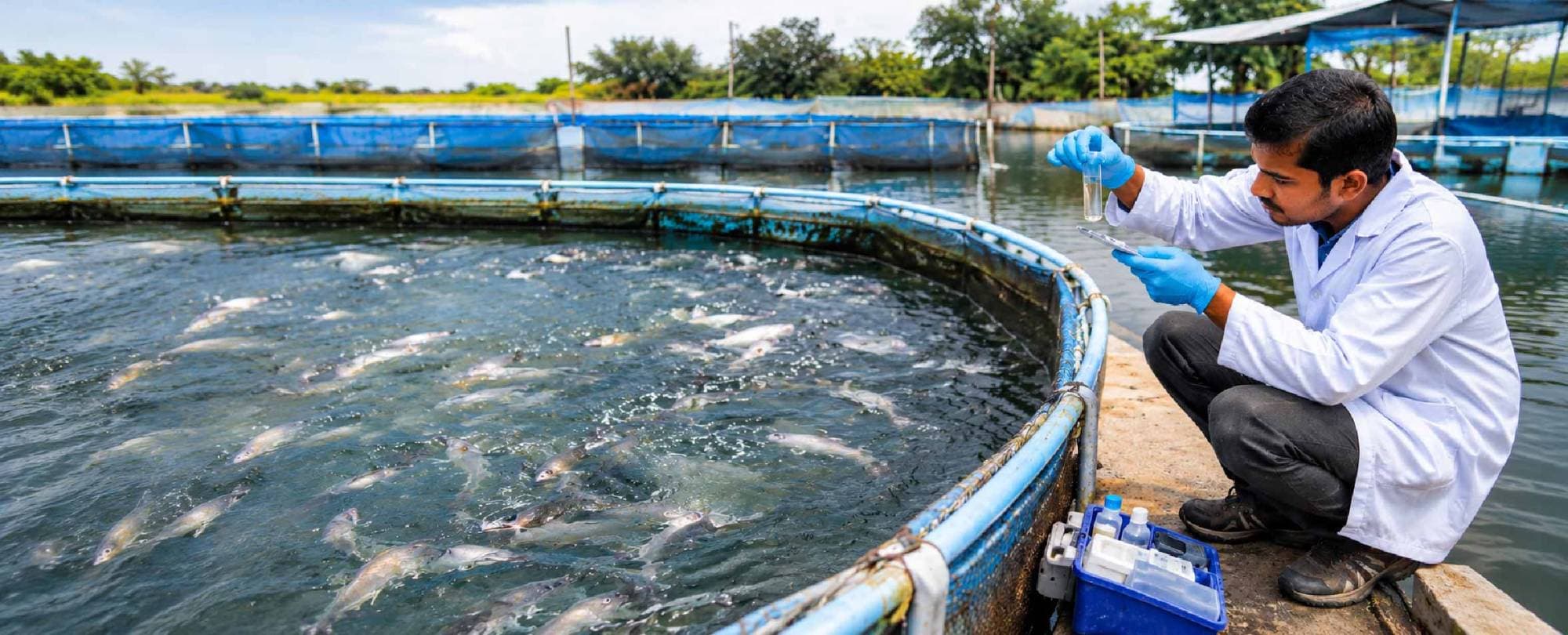
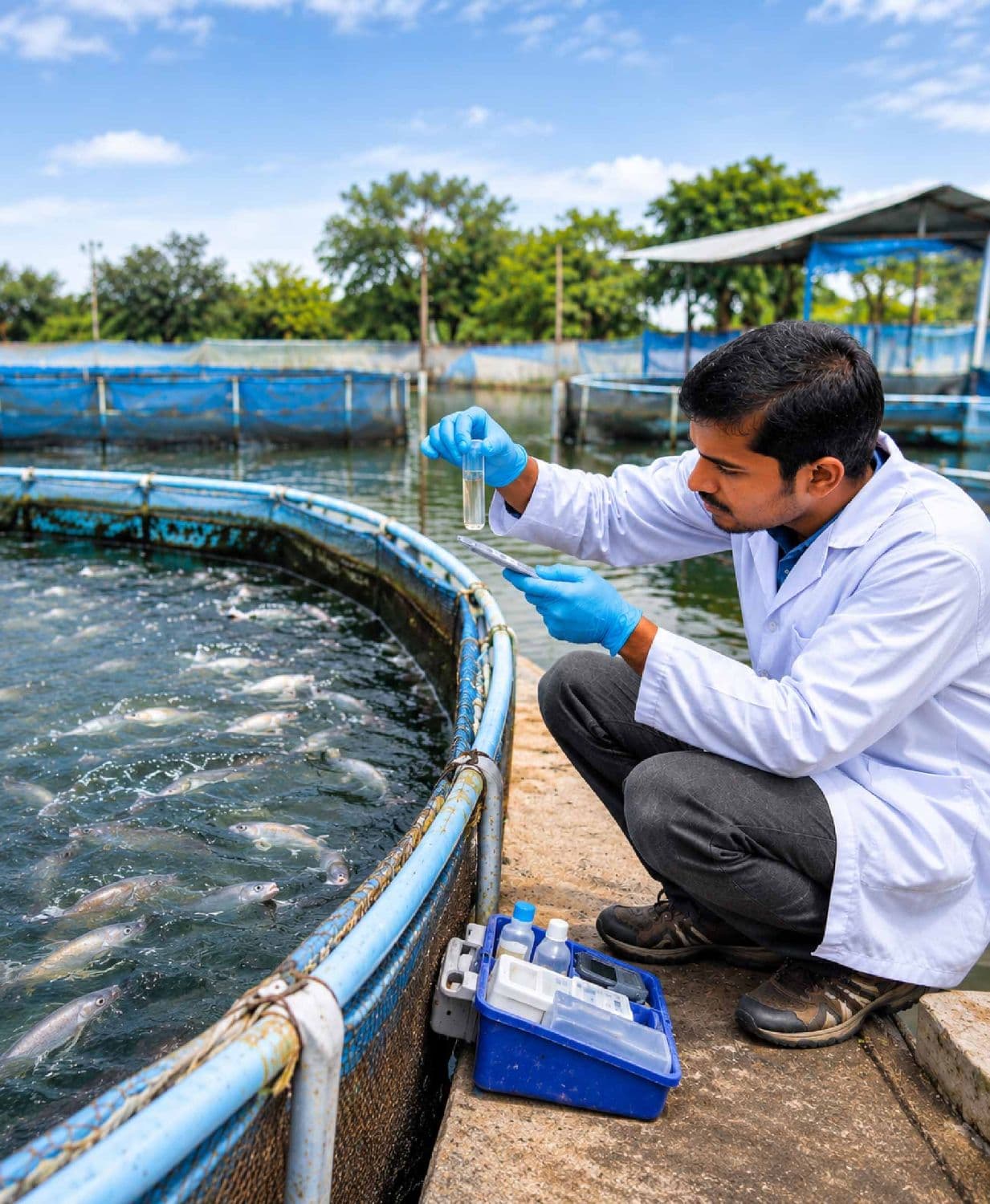
Water-quality management. Monitor parameters relevant to the species and system, such as temperature, dissolved oxygen, pH, ammonia and salinity where applicable. Maintain suitable filtration, aeration and water exchange. Sudden changes can stress animals and complicate disease management.
Routine health observation. Monitor feeding response, swimming behaviour, appearance, growth and mortality. Record unusual changes and investigate them promptly.
Cleaning and disinfection. Establish documented procedures for nets, tanks, pipes, tools, vehicles and work areas. Select products and concentrations appropriate to the equipment and target organisms, follow instructions and handle them safely. Cleaning should precede disinfection where required.
Movement and access controls. Limit unnecessary movement between production units. Use dedicated equipment where possible, establish clean and restricted areas, and provide clear hygiene instructions for staff and visitors.
Mortality and waste management. Remove dead or moribund animals promptly and handle them using approved procedures. Manage sludge, wastewater and other waste streams to reduce pathogen dissemination and environmental harm.
Emergency response. Define who must be notified, how affected units will be isolated, how samples will be collected and which movement restrictions may be needed if disease is suspected.
Surveillance, diagnostics and early response
Biosecurity is strongest when supported by reliable surveillance. Routine observation can identify warning signs, while laboratory diagnostics can help determine the cause. Depending on the suspected condition, investigations may include pathogen detection, microscopy, culture, molecular testing or other validated methods.
Sampling should be planned carefully. Poor handling, delays or unrepresentative samples can affect results. Farmers should seek guidance on which animals and tissues to sample, how to preserve specimens and how to transport them to an appropriate laboratory.
A sudden rise in mortality, reduced feeding, abnormal swimming or visible lesions should trigger prompt investigation. These signs are not specific to one disease and may also reflect water-quality problems, nutrition or environmental stress. Avoid relying on visual signs alone or using medicines without diagnosis and professional guidance.
Biosecurity and environmental sustainability
Sustainable aquaculture depends on maintaining healthy stocks while managing resources and environmental impacts. Disease prevention can reduce avoidable losses and the need for repeated interventions. Good water management, responsible waste handling and careful movement controls can also reduce pressure on surrounding ecosystems.
Measures should be proportionate to the production system. A small pond farm, a hatchery and a large cage-based operation will not have identical risks or resources. Plans are most effective when realistic, documented and reviewed as conditions change.
Coordination beyond the farm is valuable. Shared surveillance, transparent reporting, responsible seed-stock movement and communication among neighbouring producers can help address risks that individual farms cannot manage alone.
Building a practical farm-level routine
Map the farm and identify water inlets and outlets, animal entry points, equipment routes, storage areas, waste-handling locations and contact with neighbouring farms or wild populations. Rank the most likely disease pathways and select controls that can be implemented consistently.
Assign a responsible person to each routine. Maintain a simple log of stock movements, health observations, mortality, water-quality checks and cleaning activities. Train staff to recognise and report unusual signs. Review the plan after an outbreak, a change in species or production system, or the introduction of new suppliers and equipment.
Biosecurity should be treated as a continuous management process rather than a document prepared only for inspection.
Conclusion: prevention underpins resilient aquaculture
Aquaculture biosecurity is fundamental to fish health, farm resilience and sustainable production. By combining responsible stock sourcing, water-quality management, hygiene, surveillance, staff training and emergency planning, farms can reduce the likelihood and impact of disease events.
No single measure can eliminate all risk. The strongest approach is layered, evidence-based and adapted to local conditions. Collaboration among farmers, aquatic animal-health professionals, researchers, laboratories and regulators is essential to strengthen disease preparedness across the sector.
GARCX 2026: Further discussion
Explore GARCX 2026 for interdisciplinary discussions on aquaculture, animal health, sustainable food systems and One Health. The hybrid conference will be held on 23–24 November 2026 in Dubai, UAE.
Conference agenda | Delegate information
Frequently Asked Questions
Planned measures to prevent infectious agents from entering a fish farm and limit their spread within and beyond the facility.
Risks include infected stock, contaminated water, shared equipment, people, wildlife, neighbouring farms and unsafe waste handling. Pathways vary by system.
Use healthy stock, quarantine new arrivals where appropriate, monitor water quality and fish behaviour, clean and disinfect equipment, control movements and investigate unusual mortality quickly.
Poor or unstable water conditions can stress aquatic animals and make disease management more difficult. Monitoring should reflect the species and production system.
Record the event, check water-quality conditions, limit unnecessary movements and seek advice from a qualified aquatic animal-health professional or relevant authority. Collect diagnostic samples as advised.
No. It prioritises prevention, monitoring, hygiene and risk management. Treatments should be based on appropriate diagnosis and professional guidance.
Share :